When America Decided Camels Were the Solution to Western Expansion
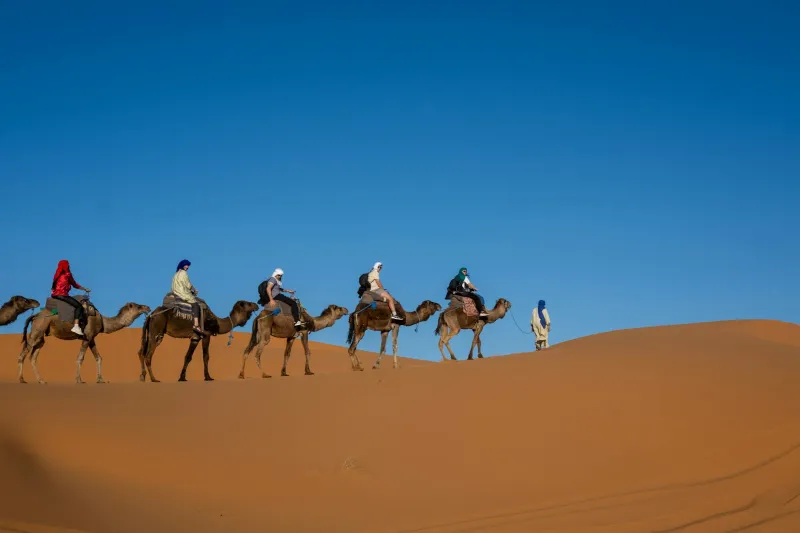
The Most Ridiculous Military Experiment in American History
Picture this: It's 1856, and the United States government has just spent $30,000 (roughly $1 million today) shipping 34 camels across the Atlantic Ocean to revolutionize military transportation in the American Southwest. If this sounds like the setup to a tall tale, you're not alone—but every word is documented history, complete with congressional appropriations and military reports that read like comedy sketches.
The U.S. Camel Corps wasn't born from desperation or madness, but from the calculated ambition of Jefferson Davis—yes, the future president of the Confederacy—who served as Secretary of War under President Franklin Pierce. Davis looked at the vast, arid territories recently acquired from Mexico and saw a logistics nightmare that conventional horses and mules couldn't solve. His solution? Import the desert's most famous residents and turn them into American military assets.
The Grand Vision
Davis's reasoning was actually sound, at least on paper. The southwestern territories were brutal on traditional pack animals—water was scarce, forage was limited, and the terrain was punishing. Camels, he argued, could carry heavier loads, travel longer distances without water, and thrive in conditions that killed horses. It was innovative thinking that ignored one crucial detail: nobody in America knew how to handle camels.
Congress, in a rare moment of bipartisan enthusiasm for the bizarre, approved the experiment in 1855. The appropriation bill authorized the importation of camels "for military purposes," making it the only time in American history that Congress officially voted to weaponize dromedaries.
Operation Desert Ship
The logistics of shipping camels across the Atlantic were as absurd as they were complex. The U.S. Navy converted the supply ship USS Supply into a floating zoo, complete with specially constructed stalls and a crew who had never seen a camel outside of illustrated books. The ship sailed to the Mediterranean, where American agents negotiated with Turkish and Egyptian dealers for the finest military-grade camels money could buy.
The first shipment arrived in Texas in 1856, and chaos began immediately. The camels, stressed from weeks at sea and confused by their new environment, proved difficult to unload. Sailors who had signed up to serve their country found themselves wrestling with spitting, biting desert animals that seemed personally offended by the entire arrangement.
Culture Clash in the Desert
The Army assigned the camel experiment to Camp Verde, Texas, where soldiers discovered that their new allies came with unexpected complications. Camels, it turned out, terrified horses and mules, sending entire cavalry units into panic whenever the dromedaries appeared. The sound of camel bells would cause military horses to bolt, and the smell of the animals made other livestock nervous for days.
Worse still, American soldiers had no idea how to care for their new charges. The Army had imported a few Turkish and Greek handlers, but language barriers and cultural differences created constant friction. The handlers knew how to work with camels but couldn't communicate effectively with American officers, while the soldiers understood military protocol but found camels completely alien.
Mixed Results in the Field
Despite the chaos, the camels occasionally proved their worth. During surveying expeditions across Arizona and Nevada, they carried heavier loads than mules and required less water, just as Davis had predicted. Some military reports noted that camels could travel 30 miles a day carrying 600 pounds of supplies—impressive by any standard.
But for every success story, there were three disasters. Camels wandered off at night, following instincts that made sense in Arabian deserts but caused havoc in American military camps. They damaged equipment with their teeth, intimidated soldiers with their size, and seemed to take malicious pleasure in spitting on anyone who annoyed them.
One famous incident involved a camel named Douglas who developed a particular hatred for a bugler. Every morning, when the soldier played reveille, Douglas would charge the musician, forcing him to climb the nearest tree to escape. The standoff became so routine that other soldiers would gather to watch the daily chase.
The Civil War Ends the Dream
The camel experiment might have continued indefinitely if not for the Civil War. When Texas seceded in 1861, Jefferson Davis had bigger concerns than desert logistics, and the Union Army inherited a camel corps it never wanted. Union officers, already dealing with rebellion and war, had little patience for exotic animals that required specialized care.
By 1863, the military had quietly abandoned the program. Some camels were sold to circuses and private owners, others were simply released into the wild. The government that had spent thousands of dollars importing specialized desert animals now couldn't give them away fast enough.
The Wild West Gets Wilder
The most surreal chapter of the camel story began after the experiment ended. Dozens of camels, turned loose in the Texas desert, began living wild lives that would continue for decades. Cowboys throughout the Southwest reported encounters with feral camels, and the animals became part of local folklore.
Newspapers from the 1870s and 1880s regularly featured stories of camel sightings. Some animals survived long enough to produce offspring, creating small herds of American-born camels roaming landscapes they were never meant to inhabit. The last confirmed wild camel sighting in Texas occurred in 1941—nearly 80 years after the military had given up on them.
Legacy of Ambition
The U.S. Camel Corps represents everything wonderful and terrible about American innovation: bold thinking, massive investment, complete cultural blindness, and spectacular failure followed by decades of unintended consequences. It was a solution to a real problem that ignored every practical consideration about implementation.
Today, the experiment lives on in historical markers scattered across the Southwest and in the occasional discovery of camel bones in places where they should never have existed. It stands as proof that sometimes the most confident government programs can produce the strangest chapters in American history—and that good ideas on paper don't always survive contact with reality, especially when that reality involves importing large, temperamental animals that nobody knows how to handle.
The camel corps failed as military policy but succeeded as pure American weirdness—a reminder that our history is full of moments when serious people made seriously strange decisions and somehow convinced Congress to pay for them.