The County Jail That Kept a Deck of Cards Instead of Prisoner Records

When Justice Became a Card Game
In 1952, when the state of Indiana conducted a routine inspection of Millfield County Jail, investigators discovered something that defied belief: the facility's entire prisoner management system was based on a deck of playing cards. For eight years, guards had been matching inmates to cards based on physical descriptions rather than maintaining proper records, creating a bizarre lottery system where your chances of freedom depended more on luck than law.
 Photo: Millfield County Jail, via midmichigannow.com
The discovery came to light when Inspector Margaret Coleman noticed that the jail's "filing cabinet" was actually a cigar box containing a well-worn deck of cards, each annotated with physical descriptions in faded pencil.
"I thought it was someone's lunch break entertainment," Coleman later testified. "Then I realized it was their entire administrative system."
The Warden's Ingenious Solution
The system had been implemented by Warden Eugene "Deck" Patterson, a former riverboat captain who took over the jail in 1944. Faced with a facility designed for 30 inmates but regularly holding 60 or more, Patterson decided that traditional paperwork was too cumbersome for his small staff.
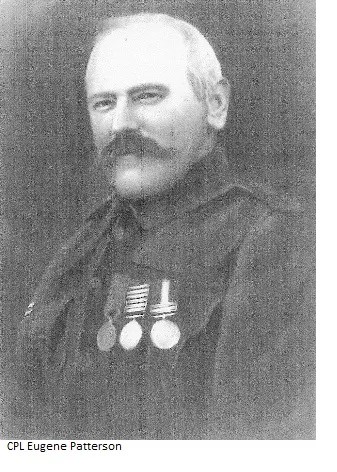 Photo: Warden Eugene Patterson, via bwm.org.au
His solution was elegantly simple: assign each incoming prisoner to a playing card based on their most distinctive physical feature. The King of Spades was reserved for tall, dark-haired men. The Queen of Hearts went to blonde women. The Ace of Clubs was for anyone missing teeth.
"Deck figured if sailors could navigate by the stars, he could run a jail by the cards," explained Deputy Sheriff Harold Weeks, who worked under Patterson for six years before realizing the system's fundamental flaws.
How the System Worked (and Didn't)
When a new prisoner arrived, guards would examine their appearance and assign them to an available card. The card would then be annotated with basic details: "5'8", brown hair, scar on left hand, drunk and disorderly." The physical card would be placed in the "active" pile, and the prisoner would be told their card designation.
Releases worked in reverse. When someone was supposed to be freed—whether through bail, completed sentence, or court order—guards would simply pull the matching card from the active pile and release whoever was assigned to it.
The problems were obvious to everyone except Warden Patterson. Physical descriptions are subjective. People change appearance. And most critically, multiple prisoners often shared similar characteristics.
The Case of the Swapping Sams
The most documented disaster involved two men named Samuel—Samuel Morrison, a 45-year-old farmer arrested for public intoxication, and Samuel Martinez, a 32-year-old drifter charged with armed robbery. Both were approximately 5'10" with dark hair and mustaches. Both were assigned to the Jack of Diamonds.
When Morrison's family posted bail three days later, guards consulted their card system and released Martinez instead. Morrison remained in jail for six additional weeks, missing his daughter's wedding, while Martinez disappeared into the countryside with a substantial head start on the law.
The mix-up was only discovered when Martinez was recaptured in Illinois and Morrison's lawyer demanded an explanation for why his client was still behind bars despite posting bail.
The Great Shuffle of 1949
The system's most spectacular failure occurred during what guards later called "The Great Shuffle." A new deputy, unfamiliar with the card system, accidentally knocked over the cigar box, scattering all 52 cards across the floor. Rather than admit the mistake, he gathered the cards and randomly redistributed them to current prisoners.
Overnight, sentences and charges were effectively scrambled. A man serving 30 days for vagrancy suddenly found himself assigned to a card that indicated he was awaiting trial for cattle rustling. A woman held on a minor theft charge was accidentally matched to a card describing a suspected arsonist.
The chaos took three months to sort out, during which time the jail operated on what one guard described as "organized confusion." Some prisoners served extra time, others were released early, and several were charged with crimes they'd never committed.
The Innocent Man Who Served Four Sentences
Perhaps the most tragic case was that of Robert "Bobby" Chen, a traveling salesman who was arrested for a minor traffic violation in 1948. Due to his unusual appearance as one of the few Asian Americans in the county, guards assigned him to the Joker card—a designation they used for "unusual cases."
The problem was that the Joker card was repeatedly reused whenever someone "unusual" was arrested. Over the next two years, Chen was accidentally released and re-arrested four separate times, serving sentences for crimes committed by other men who had also been assigned to the Joker.
Each time Chen protested his innocence, guards would check their card system, see that the Joker was indeed assigned to someone matching his description, and assume he was lying about his identity. By the time the system was discovered, Chen had served a total of 18 months for crimes he'd never committed.
The Audit That Ended the Game
The card system finally collapsed when the state conducted its 1952 inspection. Inspector Coleman spent three days trying to reconcile the jail's population with actual court records, only to discover that the facility had no idea who most of their prisoners actually were.
"They had 47 people in custody but could only positively identify 12 of them," Coleman wrote in her report. "The rest were known only by their card designations and physical descriptions."
The investigation revealed that over eight years, the jail had mistakenly released at least 23 prisoners early and held 31 people beyond their legal sentences. Several inmates had been charged with crimes they'd never committed, and at least one person had been arrested for the same crime three times due to clerical confusion.
Warden Patterson's Defense
When confronted with the evidence, Warden Patterson remained defiant. "My system worked fine until people started interfering with it," he told investigators. "A card don't lie about what someone looks like. Names can be faked, but you can't fake being six feet tall with red hair."
Patterson was removed from his position but never faced criminal charges. He spent his remaining years insisting that his card system was superior to "all that paperwork nonsense" and that the problems had been caused by deputies who "couldn't tell a King from a Queen."
The Legacy of the Card File
The Millfield County Jail incident became a case study in criminal justice programs across the country, illustrating the importance of proper record-keeping in the legal system. The facility was completely reorganized, and new procedures were implemented to prevent similar disasters.
The original deck of cards was preserved as evidence and later donated to the Indiana State Museum, where it remains on display as a reminder of what happens when creativity replaces competence in government operations.
 Photo: Indiana State Museum, via raai.com
Today, Millfield County Jail operates with modern computerized systems and strict protocols for prisoner identification. But old-timers in the area still refer to any bureaucratic mix-up as "getting dealt the wrong card"—a phrase that serves as a lasting memorial to eight years of institutionalized chaos that somehow passed for justice.