Checkout Aisle Espionage: How Grocery Store Coupons Exposed a Cold War Spy Ring
The Suburban Spy Game
In the summer of 1978, the most sophisticated intelligence operation in Detroit wasn't happening in shadowy back alleys or diplomatic offices. It was unfolding in the fluorescent-lit aisles of Farmer Jack's grocery store in suburban Dearborn, where CIA operatives had established an ingenious communication network using something completely ordinary: manufacturer's coupons.
 Photo: Farmer Jack's, via www.farmerjacks.com.au
The system was brilliant in its simplicity. Agents would use specific coupon combinations as coded messages, leaving them in predetermined locations throughout the store. A coupon for Tide detergent paired with one for Campbell's soup might signal "mission proceeding as planned," while a Coca-Cola coupon torn in half could mean "abort immediately." The beauty of the system was its invisibility – who would suspect espionage in the produce section?
The Cashier Who Changed Everything
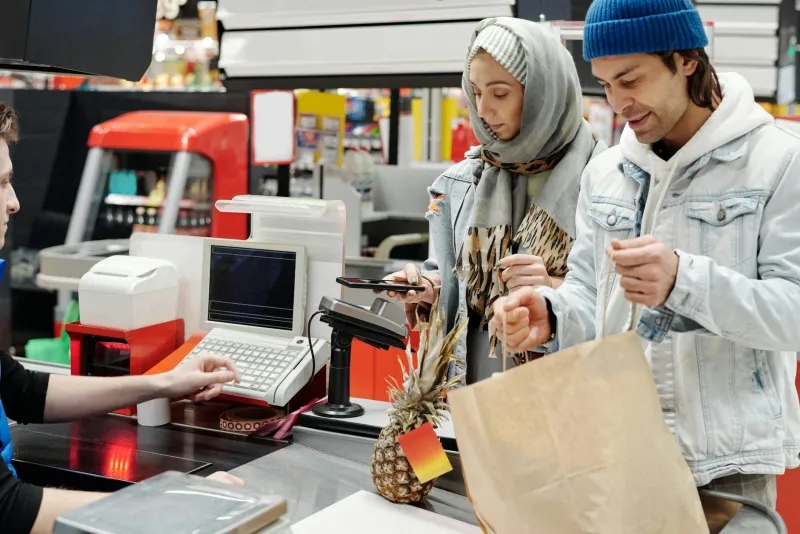
Margaret Thompson had worked checkout lane number seven at Farmer Jack's for twelve years. She knew every regular customer, every sale price, and every promotion by heart. So when a well-dressed man approached her register on July 23, 1978, with an unusual collection of coupons, something felt off.
 Photo: Margaret Thompson, via images.squarespace-cdn.com
The customer, later identified as CIA operative David Chen, presented what appeared to be a normal shopping transaction. But Thompson noticed that several of his coupons were for products he hadn't purchased. When she pointed this out, Chen became flustered and claimed he'd grabbed the wrong items. He quickly left the store, abandoning his groceries and leaving behind what would become crucial evidence.
The Investigation Unfolds
Thompson's supervisor initially dismissed her concerns, but the abandoned coupons told a strange story. Some bore tiny pencil marks in the corners. Others had been carefully torn in specific patterns. Most puzzling of all, several coupons were for products that weren't even sold at that particular Farmer Jack's location.
What started as a routine report to store security eventually reached the FBI, where analysts recognized the hallmarks of a sophisticated communication system. The coupons weren't random – they were a code. Within weeks, federal investigators had identified the grocery store as the center of an active intelligence operation.
The Suburban Spy Network
Declassified documents from the operation, released in 1995, revealed the stunning scope of what investigators dubbed "Operation Checkout." The CIA had been using grocery stores across the Detroit metropolitan area as communication hubs for agents monitoring Soviet activities at nearby industrial facilities. The coupon system allowed operatives to pass messages without ever meeting face-to-face or risking electronic surveillance.
The network had been operating successfully for over three years before Thompson's sharp eyes brought it down. Agents had conducted hundreds of transactions, passing intelligence about Soviet technical advisors working at automotive plants and defense contractors. The system was so effective that the CIA had begun implementing similar programs in other cities.
The Unintended Consequences
The exposure of Operation Checkout created an unexpected problem for American intelligence agencies. If a grocery store cashier could spot suspicious coupon usage, what other everyday interactions might compromise covert operations? The incident sparked a comprehensive review of CIA tradecraft, focusing on how consumer culture could create vulnerabilities.
Investigators discovered that loyalty cards, frequent shopper programs, and even credit card receipts generated paper trails that sophisticated adversaries could potentially analyze. The mundane routines of suburban life – grocery shopping, gas station visits, pharmacy pickups – suddenly became potential security risks.
The Human Factor
What made Thompson's discovery particularly remarkable was her motivation. She later told investigators that she wasn't suspicious of espionage – she was simply annoyed by customers who tried to use coupons incorrectly. Her twelve years of checkout experience had trained her to spot any deviation from normal shopping patterns, no matter how subtle.
"I didn't think I was catching spies," Thompson recalled in a 1985 interview. "I just thought someone was trying to scam the store with fake coupons. I'd seen it all before – people trying to use expired coupons, photocopied coupons, coupons for products they didn't buy. This seemed like more of the same."
The Aftermath
The collapse of Operation Checkout didn't just affect the Detroit area. The CIA was forced to abandon similar coupon-based communication systems in twelve other cities, disrupting ongoing operations and requiring the costly development of new tradecraft methods. Several long-term surveillance operations had to be terminated because their communication methods had been compromised.
Margaret Thompson received a commendation from the FBI and a modest cash reward, though she was sworn to secrecy about the details until the operation was declassified years later. Farmer Jack's grocery store briefly became a tourist attraction for intelligence enthusiasts, though most customers remained oblivious to the drama that had unfolded in aisle seven.
Lessons from the Checkout Lane
The story of Operation Checkout illustrates how the Cold War played out not just in Berlin and Moscow, but in the everyday spaces of American life. Shopping centers, gas stations, and grocery stores became inadvertent battlegrounds where global conflicts intersected with local commerce.
More importantly, Thompson's discovery demonstrated that the most sophisticated intelligence operations could be undone by the most ordinary vigilance. In a world of high-tech surveillance and elaborate spy gadgets, sometimes the most powerful intelligence tool was simply paying attention to what didn't belong.
Today, when intelligence agencies design covert operations, they still consider what intelligence professionals call "the Margaret Thompson factor" – the possibility that an alert civilian might notice something unusual and ask inconvenient questions. It's a reminder that in the spy game, the greatest threats often come from the most unexpected places.