How One Dead Pig Nearly Triggered a War Between America and Britain
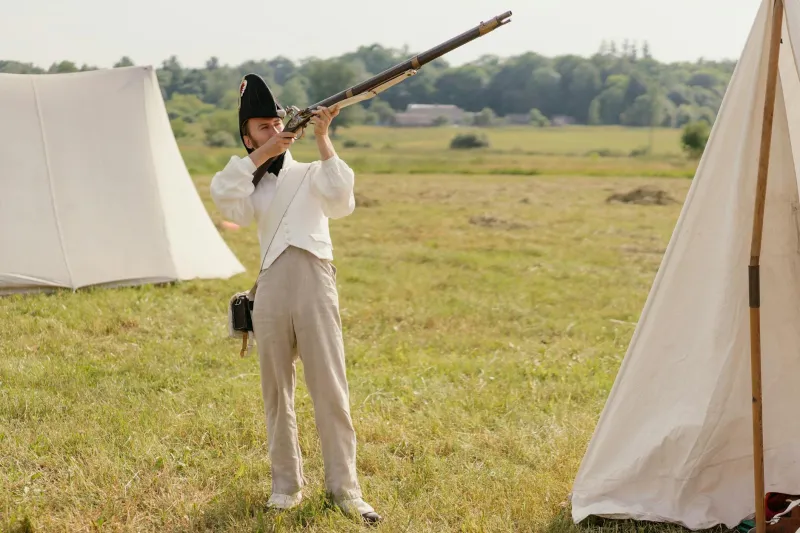
The Shot That Almost Changed History
Imagine explaining to your grandchildren that World War III started because someone killed a pig. Sound ridiculous? In 1859, that scenario came terrifyingly close to reality on a tiny island in the Pacific Northwest, where a single gunshot nearly plunged America and Britain into their third war in less than a century.
The location was San Juan Island, a 55-square-mile chunk of rock and forest caught in a bizarre territorial limbo between Washington Territory and British Columbia. Both nations claimed ownership, but rather than fight about it, they'd agreed to let settlers from both countries live there peacefully while diplomats sorted things out. It was a gentleman's agreement that worked perfectly—until June 15, 1859, when an American settler named Lyman Cutlar discovered a large black boar rooting through his potato garden.
When Breakfast Becomes an International Incident
The pig belonged to Charles Griffin, an Irishman working for the British Hudson's Bay Company. Griffin had been warned repeatedly to keep his livestock penned, but the boar had a habit of wandering into American settlers' gardens. On this particular morning, Cutlar had finally had enough. He grabbed his rifle and shot the pig dead.
What happened next reads like a comedy of errors written by someone with a very dark sense of humor. Griffin demanded $100 in compensation—roughly $3,000 in today's money—for what he claimed was a prize breeding boar. Cutlar countered with an offer of $10, pointing out that the pig was trespassing and destroying his crops. When Griffin threatened to have him arrested by British authorities, Cutlar made a fateful decision: he rode to the American military camp and requested protection.
Escalation at Lightning Speed
Captain George Pickett—yes, the same Pickett who would later lead the infamous charge at Gettysburg—commanded the small American garrison. When he heard about the dispute, Pickett saw an opportunity to assert American sovereignty over the island. He landed with 64 soldiers and set up camp, essentially daring the British to do something about it.
The British obliged. Within days, HMS Tribune appeared in the harbor, followed by two more warships. Soon, nearly 500 British marines were staring down Pickett's small force across the beaches of San Juan Island. The situation had spiraled from a property dispute to a full military standoff in less than a week.
Back in their respective capitals, officials watched in horror as reports arrived describing the escalating crisis. In London, newspapers began calling for military action to defend British honor. In Washington, politicians demanded that American sovereignty be upheld at all costs. Both sides started mobilizing additional forces.
The Admiral Who Refused to Start a War
Fortunately for world history, not everyone involved had lost their minds. British Rear Admiral Robert Baynes, commander of the Pacific Station, received orders to "dislodge the Americans" but took one look at the situation and essentially said, "Are you people insane?"
Baynes understood something his superiors back in London didn't: starting a war over a dead pig was probably the stupidest thing two civilized nations could do. He reportedly told his subordinates, "I will not involve two great nations in a war over a squabble about a pig." Instead of attacking, he opened negotiations with American officials.
The Standoff That Lasted Twelve Years
What followed was one of history's most peaceful military occupations. Both sides agreed to station small forces on the island while diplomats worked out the territorial dispute. American and British soldiers lived side by side for over a decade, sharing supplies during harsh winters and even celebrating holidays together. The only casualty of the entire "war" was the pig that started it all.
Meanwhile, in the halls of power, the Pig War became a diplomatic embarrassment that both nations wanted to forget. The American Civil War soon overshadowed the dispute, and British attention turned to other colonial matters. The standoff dragged on year after year, with neither side willing to back down but both too embarrassed to escalate further.
An Emperor Settles the Score
The resolution finally came in 1872, when both nations agreed to let German Kaiser Wilhelm I arbitrate the dispute. After reviewing maps, treaties, and testimonies, the Kaiser ruled in favor of the United States. San Juan Island became American territory, and the British garrison sailed away after twelve years of the world's most cordial military occupation.
The Legacy of a Very Important Pig
Today, San Juan Island National Historical Park commemorates the Pig War with exhibits that highlight the absurdity of the entire affair. Visitors can walk the beaches where two great powers nearly came to blows over pork chops, and rangers tell the story with the bemused tone it deserves.
The Pig War stands as a testament to how quickly international relations can spiral out of control—and how much damage a single dead farm animal can cause when national pride gets involved. In an age when social media can turn minor disputes into global controversies overnight, perhaps there's a lesson here about the importance of keeping perspective when barnyard animals are involved.
After all, Charles Griffin's pig may have been the most consequential hog in American history, even if it never lived to see the chaos it caused.