Lightning's Favorite Target: The Park Ranger Who Survived Seven Strikes and Wished He Hadn't
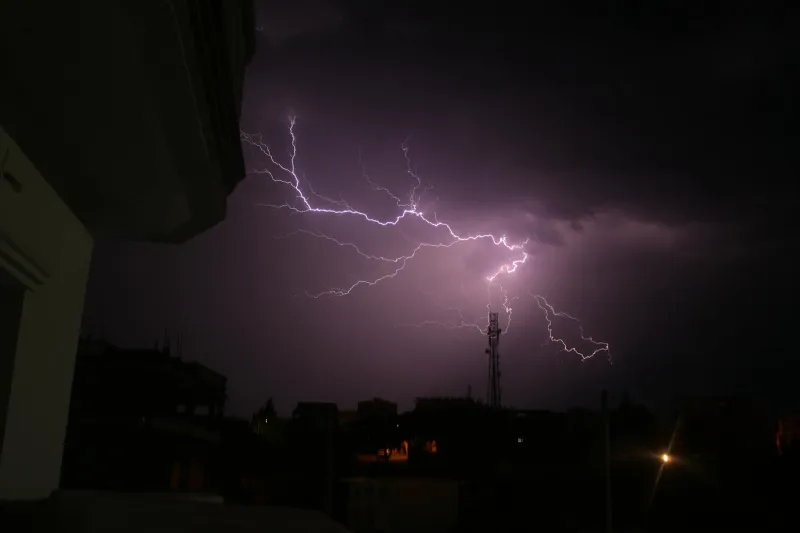
The Human Lightning Rod
Imagine being so unlucky that your greatest fortune becomes your worst curse. Roy Sullivan knew this paradox better than anyone—a Virginia park ranger who survived seven direct lightning strikes between 1942 and 1977, earning him a place in the Guinness Book of World Records and a lifetime of terror every time storm clouds gathered.
Sullivan's relationship with electricity began innocently enough. Working as a ranger in Shenandoah National Park, he spent his days maintaining trails and fire towers, often in remote areas where storms could roll in without warning. What started as occupational hazard became something far more sinister—a cosmic joke that would follow him for thirty-five years.
Strike One: The Fire Tower Incident
In 1942, Sullivan was manning a fire lookout tower when lightning found him for the first time. The bolt tore through the structure, singeing his hair and leaving him with a lifelong limp. Most people would consider surviving such a strike a miracle. Sullivan later admitted he should have known it was just the beginning.
The second strike came in 1969—twenty-seven years later—while he was driving his truck. Lightning shot through the vehicle's roof, melting his eyebrows and knocking him unconscious. The truck veered off the road, but Sullivan survived with burns across his chest and arms.
When Lightning Strikes Thrice
By 1970, Sullivan was becoming locally famous for his electrical encounters. The third strike hit him in his own front yard while he was tending to his garden. This bolt burned his left shoulder and sent him sprawling across his tomato plants. Neighbors began whispering that Roy Sullivan was either blessed or cursed—though Sullivan himself was beginning to suspect the latter.
The fourth strike, in 1972, caught him inside a ranger station. Lightning traveled down the building's metal framework, setting his hair on fire and leaving him with burns on his legs. This time, Sullivan began carrying a bucket of water in his truck—not for firefighting, but to douse himself if his hair caught fire again.
The Paranoia Sets In
By the mid-1970s, Sullivan's life had become a constant state of meteorological anxiety. He obsessively checked weather forecasts and would abandon outdoor activities at the first sign of clouds. When the fifth strike hit him in 1973—while he was walking across a parking lot, sending him flying twenty feet—Sullivan began to believe he was being personally targeted by nature itself.
The sixth strike, in 1976, happened while he was checking on campers. Lightning struck a nearby tree, traveled down the trunk, and jumped to Sullivan, burning his ankles and chest. Witnesses said the bolt seemed to seek him out, defying the normal patterns of electrical discharge.
The Final Strike
Strike number seven came in 1977 while Sullivan was fishing—one of the few activities he still felt safe doing under open sky. Lightning hit him directly on the head, burning his hair and chest before throwing him into the water. This final encounter left him with the most severe injuries yet: burns, temporary hearing loss, and a deep psychological scar that never fully healed.
Living with Lightning
Sullivan's survival defied every statistical probability. The odds of being struck by lightning once in a lifetime are roughly 1 in 15,300. The odds of being struck seven times? Astronomically impossible—yet here was a man who had become nature's unwilling pin cushion.
The physical toll was severe. Sullivan's body bore the permanent marks of his encounters: scars, hearing damage, and chronic pain from repeated electrical burns. But the psychological impact was perhaps worse. He became increasingly isolated, afraid to venture outdoors during anything resembling storm weather. Friends and family described a man who would scan the sky constantly, reading cloud formations like an ancient oracle predicting his own doom.
The Price of Fame
Sullivan's story attracted international attention. Reporters traveled to Shenandoah to interview the "human lightning rod," and his tale was featured in newspapers worldwide. The Guinness Book of World Records officially recognized his unfortunate achievement, cementing his place in history as the most lightning-struck person ever documented.
But fame couldn't ease Sullivan's growing paranoia. He began carrying an umbrella everywhere—not for rain, but for lightning protection (a strategy that actually increases strike risk, though Sullivan didn't know this). He would drive miles out of his way to avoid areas where storms were forecast, and he refused to attend outdoor events during summer months.
A Cruel Cosmic Joke
Roy Sullivan died in 1983 at age 71—not from lightning, but from a self-inflicted gunshot wound, reportedly over unrequited love. The man who had survived nature's most violent electrical displays couldn't survive the storms in his own heart.
His story remains one of the strangest statistical anomalies in recorded history. Seven lightning strikes don't just happen to random people—the odds are so remote that Sullivan's experience borders on the supernatural. Yet every strike was documented, witnessed, and medically verified.
Sullivan once told a reporter, "I don't understand it. I've dodged death seven times, but I can't escape the fear of it happening again." In the end, his greatest survival story became his greatest burden—proof that sometimes the most extraordinary luck can feel like the cruelest curse of all.