When Democracy Broke the Map: The Town That Lived Under Two Names for Four Decades

The Vote That Time Forgot
Picture this: you live in a town where everyone agrees on the name — except the rest of the world has no idea what you're talking about. For four decades, that was daily life in what residents called Heroville, Iowa, though every map, road sign, and government document still insisted they lived in boring old Millerville.
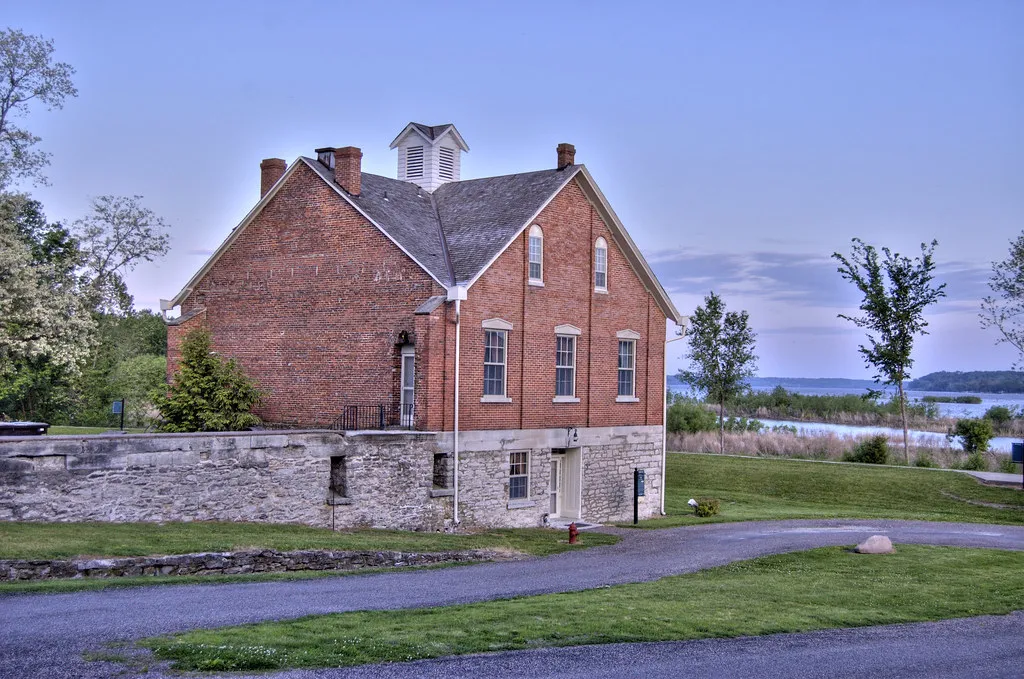 Photo: Heroville, Iowa, via farm4.staticflickr.com
The chaos began innocently enough in 1938, when the 847 residents of Millerville decided their sleepy farming community deserved a name that reflected its proudest moment. Local boy Jimmy Patterson had died fighting fascists in the Spanish Civil War, and townspeople wanted to honor his memory by rechristening their home "Heroville" — a tribute to their fallen neighbor who'd become an international symbol of American courage.
 Photo: Jimmy Patterson, via vignette.wikia.nocookie.net
The town council organized a proper referendum. Campaign signs went up. Neighbors debated over coffee at Murphy's Diner. When election day arrived, democracy worked exactly as intended: 312 votes for the name change, 89 against, with the rest staying home to tend their corn.
Mayor Harold Krause filed the paperwork with the county courthouse, paid the $15 processing fee, and even commissioned new letterhead for city hall. Everything seemed perfectly official.
The Bureaucratic Bermuda Triangle
But somewhere between the courthouse filing cabinet and the Iowa Secretary of State's office, Heroville vanished into bureaucratic limbo. The county clerk, overwhelmed by a backlog of property transfers and marriage licenses, apparently filed the name change request in the wrong stack of papers. By the time anyone noticed, the original clerk had retired, his replacement had no idea what "Heroville" meant, and the paperwork had been shipped to a storage warehouse in Des Moines.
Meanwhile, residents had already started using their new name. The volunteer fire department painted "Heroville FD" on their truck. The high school football team became the Heroville Hawks. Local businesses updated their signs and advertising.
But the outside world kept right on calling them Millerville. Mail arrived addressed to the old name. Federal census workers showed up looking for a place called Millerville that apparently didn't exist — at least according to locals who insisted they lived in Heroville. Road atlases, telephone directories, and even military recruitment offices continued using the original designation.
Living the Double Life
What happened next defies logic: instead of fixing the problem, everyone just adapted to it.
Residents developed an elaborate system of dual identity management. When dealing with outsiders — tax collectors, traveling salesmen, relatives from other states — they used "Millerville." For everything local, they stuck with "Heroville." Children learned both names before they learned to tie their shoes.
The post office became a masterclass in translation. Postmaster Betty Richardson kept a handwritten chart matching Heroville addresses to their Millerville equivalents. Mail addressed to "123 Main Street, Heroville" got sorted into the "123 Main Street, Millerville" box. Packages sent to "Heroville General Store" found their way to what federal records called "Millerville General Store."
Legal documents turned into comedy sketches. Marriage certificates listed ceremonies taking place in "Millerville," while wedding invitations announced celebrations in "Heroville." Property deeds referenced "Millerville" lots, but homeowners told insurance agents they lived in "Heroville." Court cases occasionally stalled when lawyers couldn't figure out which town they were supposed to be arguing about.
The Unraveling
The double life might have continued indefinitely, but the 1970s brought computers — and computers don't appreciate creative geography.
When Iowa began digitizing municipal records, data entry clerks discovered a town that existed in two realities simultaneously. State databases showed conflicting information for the same ZIP code. Federal agencies started flagging discrepancies between census data and postal records.
The breaking point came in 1978, when a new county administrator named Susan Walsh decided to solve the mystery once and for all. After three months of archaeological digging through filing cabinets, she found the original 1938 paperwork buried under forty years of bureaucratic sediment.
"The whole thing was just sitting there in a manila folder marked 'Pending,'" Walsh later recalled. "Forty years of 'pending.'"
Resolution at Last
Walsh pushed the paperwork through proper channels, and by Christmas 1978, Heroville finally existed on official maps. Road signs got updated. Federal databases synchronized. The postal service stopped needing Betty Richardson's translation chart.
But the transition wasn't entirely smooth. Longtime residents had grown attached to their secret identity. Some continued using "Millerville" out of habit, especially when talking to grandchildren who'd grown up hearing both names. Local businesses kept their "Heroville" signs but added "(formerly Millerville)" in smaller print underneath.
The Legacy of Bureaucratic Chaos
Today, the town officially bears the name its residents chose eight decades ago. A small historical marker near city hall tells the story of America's longest-running case of municipal multiple personality disorder.
But perhaps the strangest part isn't that a clerical error created forty years of confusion — it's that an entire community quietly agreed to live with the chaos rather than make a fuss about it. In an era of instant communication and digital precision, there's something almost quaint about a place where people simply shrugged and learned to navigate two realities at once.
After all, what's in a name? In Heroville's case, apparently it depends on who you ask — and which decade you're asking in.