The Bullet That Built a Monument: How One Bungled Attack Changed an American Skyline Forever
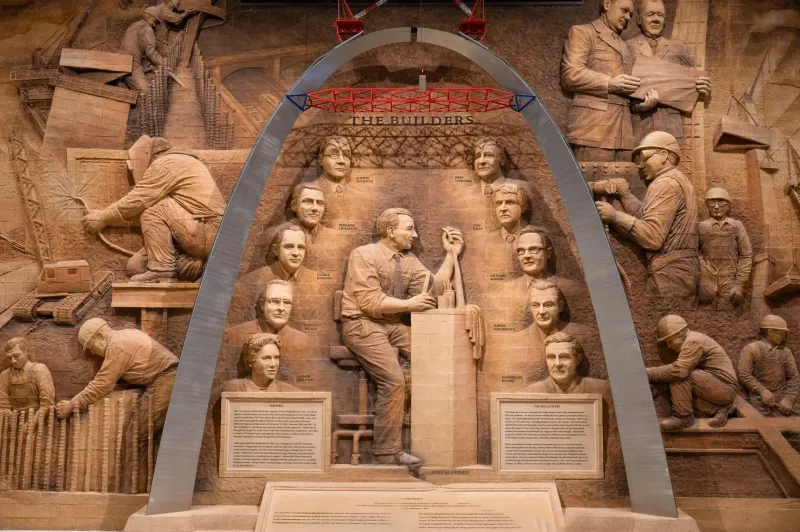
History has a habit of building its grandest achievements on its most chaotic moments. Wars produce constitutions. Disasters produce engineering breakthroughs. And occasionally, a failed act of violence produces something that millions of people visit, photograph, and celebrate without ever knowing the strange and violent origin story hidden underneath.
This is one of those stories.
A Very Bad Day for Everyone Involved
In the early years of the twentieth century, American political life was considerably more dangerous than most history textbooks suggest. The country had already lost three presidents to assassination. Public figures moved through crowds with a casualness that would make modern security details physically ill. And the gap between political grievance and physical violence was, for certain corners of American life, uncomfortably narrow.
The figure at the center of this story — a prominent public official whose name was well known in the newspapers of the day — was not a president. He wasn't even a household name outside his particular sphere of influence. But he had made enemies in the way that powerful people tend to make enemies: by making decisions that benefited some people and infuriated others.
The man who showed up with a weapon had a specific grievance and a poor plan. The attempt failed for reasons that were equal parts bad aim and extraordinary luck — the kind of luck that feels, in retrospect, almost designed. The would-be assassin was apprehended. The target survived without serious injury. The incident made the newspapers for a few days and then faded, as most failed attempts on minor public figures tend to do.
But the aftermath was anything but minor.
The Bureaucratic Avalanche
The attack, minor as it was in terms of physical damage, created an administrative crisis that nobody had prepared for. The official who had been targeted was responsible for overseeing a significant public works project — one that had been stalled for years in the particular kind of budgetary and political limbo that swallows large government undertakings whole.
His sudden removal from active duty, required while investigators sorted out the security implications of the attack, created a vacuum. And into that vacuum stepped a deputy whose approach to the stalled project was, to put it diplomatically, the opposite of his predecessor's.
Where the original official had been cautious, the deputy was aggressive. Where the original had been focused on cost containment, the deputy saw an opportunity. The project that had been languishing for years suddenly had a champion who was unencumbered by the political debts and bureaucratic caution that had kept it frozen.
Within months, funding was secured. Within a year, ground was broken.
The Thing That Got Built
The structure that rose from that ground-breaking went on to become something that its original planners — working from a much more modest vision — would have barely recognized. The deputy's ambitions had expanded the scope considerably, incorporating design elements and scale that transformed what had been conceived as a functional public facility into something genuinely monumental.
Decades later, the structure would appear on postcards. School field trips would be organized around visits to it. Documentaries would be filmed there. It would become, in the casual shorthand of American cultural life, simply a landmark — one of those places that people refer to by name without explaining where it is or what it is, because everyone already knows.
None of that happens if the original official stays in his post. None of it happens if the attack is slightly more accurate, or slightly less accurate — if the target dies, the political fallout goes in an entirely different direction. None of it happens if the deputy doesn't see the opening and move through it with the particular kind of opportunistic energy that bureaucracies usually suppress.
History's Strange Arithmetic
What makes this story worth telling — worth sitting with — is the specificity of the chain. Not just that something bad led to something good, which is the kind of vague historical comfort that gets stitched on pillows. But that this particular bad thing, in this particular sequence, with these particular people making these particular decisions, produced this particular outcome.
Remove any single link and the landmark doesn't exist. Or it exists differently — smaller, less ambitious, less visited. The postcards feature something else. The school field trips go somewhere else.
The man who fired the shot almost certainly never knew what he'd set in motion. He went to prison. He served his time. He faded from the historical record in the way that minor criminals who fail at their objectives tend to do. Meanwhile, the thing his failure accidentally created was being admired by people who had no idea he existed.
The Part Nobody Talks About
There's a version of this story that gets told at the landmark itself — on the informational plaques, in the guided tours, in the official histories distributed at the visitor center. It's a good story. It's accurate, as far as it goes. It talks about vision and perseverance and the long road from concept to completion.
It doesn't mention the gun.
It doesn't mention the missed shot, the panicked crowd, the deputy who seized his moment, or the chain of accidents that actually got the project off the ground. That version of the story is tidier. It's more comfortable. It fits better on a plaque.
But the real story — the one where a landmark was born from a botched act of violence and a series of bureaucratic accidents — is the one that's actually true.
And somehow, that makes the place more interesting, not less.