The Lighthouse Keeper Who Accidentally Rewrote Botany While Trying to Pass the Time

Photo: Unknown (commercial matchbox manufacturer), Public domain, via Wikimedia Commons
There is a particular kind of madness that comes from being stationed alone on a rocky coastline with nothing but fog, seabirds, and a lamp that needs tending every few hours. For most lighthouse keepers in the late 1800s, that madness expressed itself in whittling, letter writing, or quiet drinking. For Elias Marsh — a former merchant sailor appointed keeper of a remote light station on the northern California coast in 1879 — it expressed itself in plants.
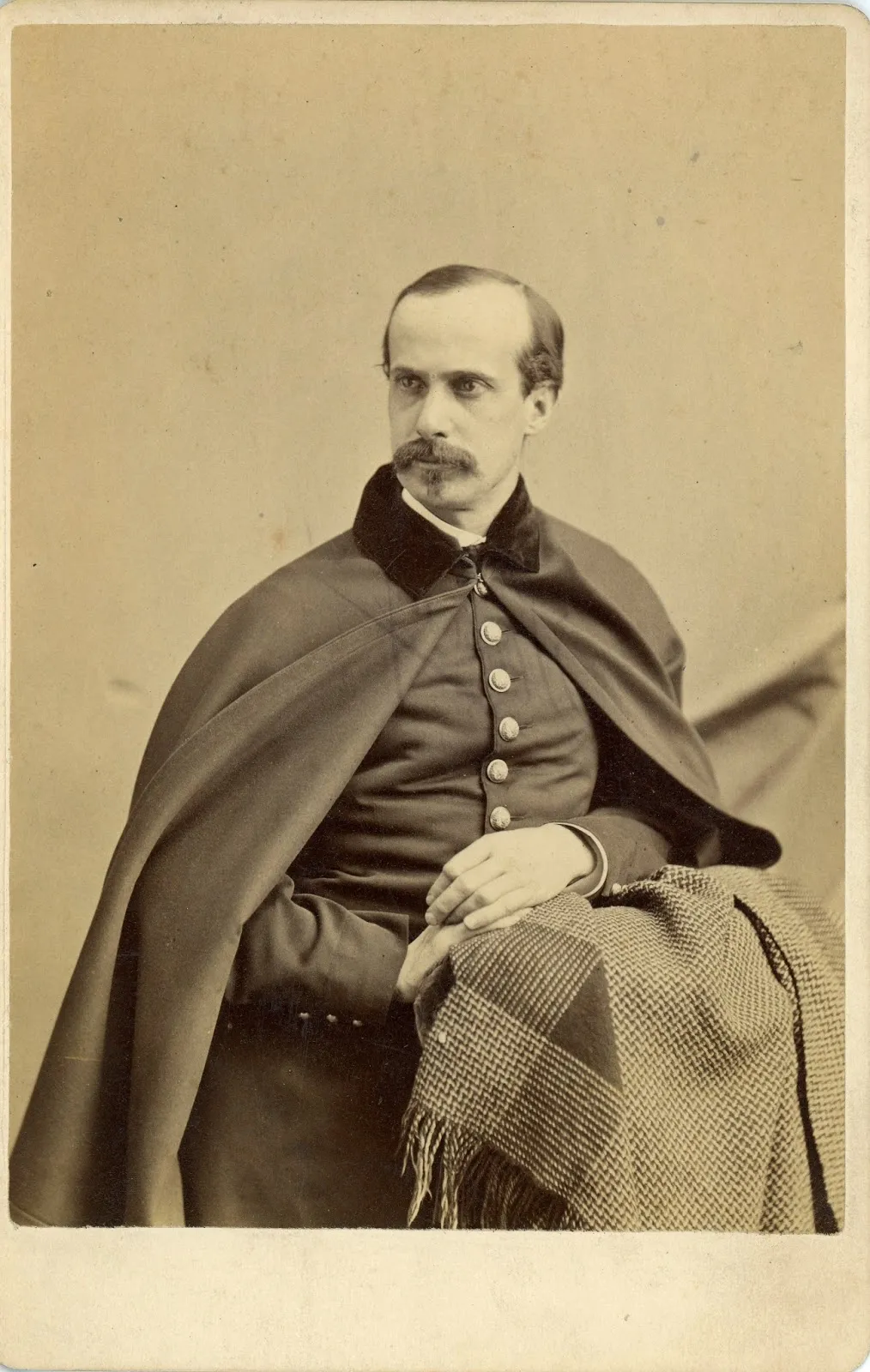 Photo: Elias Marsh, via blogger.googleusercontent.com
Not in any trained, credentialed, academically respectable way. Marsh had no formal education beyond what a mid-century maritime apprenticeship could offer. He didn't know Latin binomial nomenclature. He had never read a botanical survey. What he had was time — enormous, crushing quantities of it — and a peculiar compulsion to draw and describe everything growing in the cliffs and tidal margins around his station.
What he left behind would, nearly a century later, quietly embarrass American botanical science.
The Journals Nobody Asked For
Over the course of roughly twenty-two years at his posting, Marsh filled fourteen hand-sewn journals with meticulous pencil illustrations of local flora. His drawings were precise in the way that only obsessive repetition can produce — he would sketch the same plant across multiple seasons, noting changes in leaf shape, flower color, and stem structure with the patient attention of someone who had genuinely nothing else to do.
His written descriptions were a curious hybrid: part sailor's log, part nature diary, part personal rambling. He gave plants nicknames when he didn't know their proper names. He noted which ones the local deer avoided and which ones smelled like copper after rain. He was, in every measurable sense, an amateur operating completely outside the scientific establishment of his time.
When Marsh retired in 1901 and eventually died a few years later, his journals passed through a couple of family hands before being donated to a small coastal heritage museum sometime in the 1920s. They were cataloged, boxed, and largely forgotten — the kind of curiosity a museum keeps because throwing it away feels wrong, not because anyone expects it to matter.
For about sixty years, that's exactly where the story ended.
The Graduate Student and the Peculiar Sketch
In the mid-1980s, a University of California graduate student named Patricia Ohlsen was combing through regional archives for her dissertation on 19th-century amateur naturalism along the Pacific coast — a subject niche enough that her advisor had initially tried to talk her out of it. She came across the Marsh journals during a research trip and requested access mostly out of thoroughness.
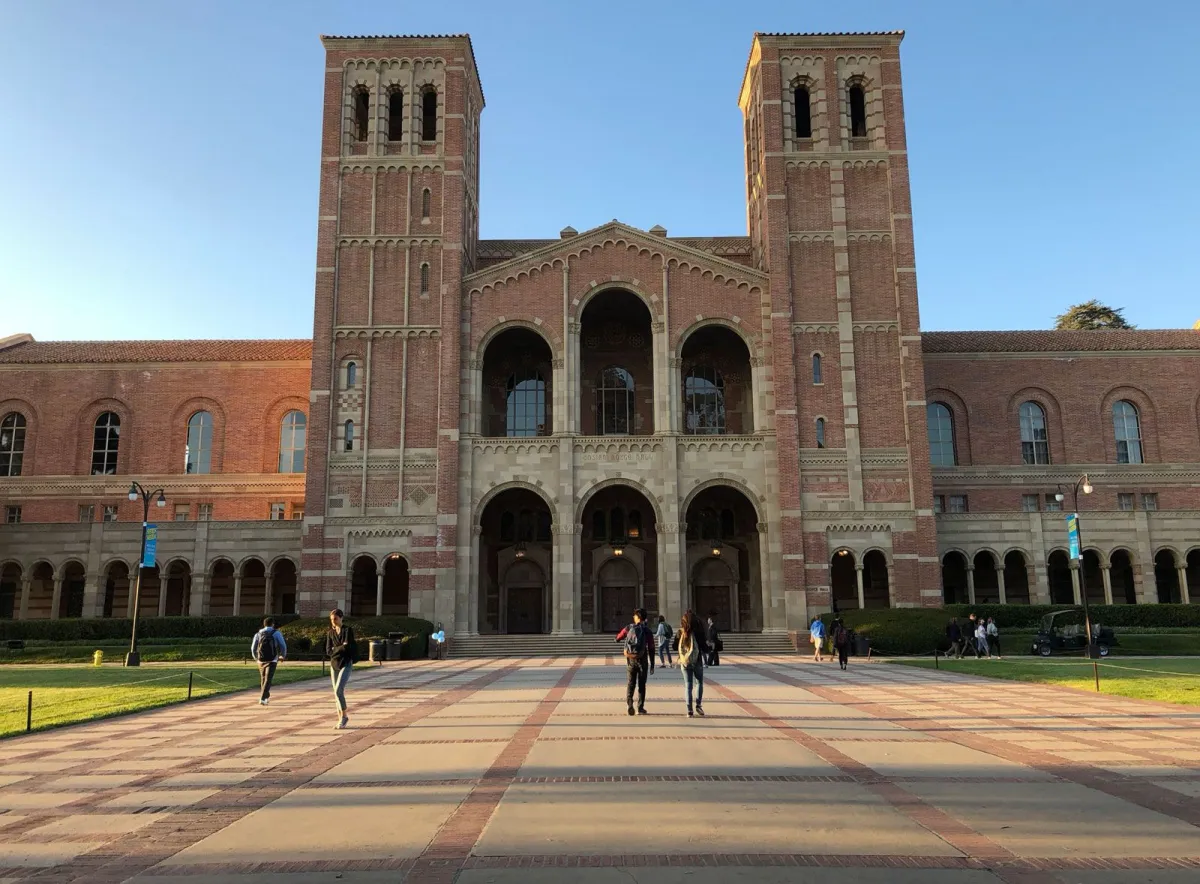 Photo: University of California, via cdn.britannica.com
 Photo: Patricia Ohlsen, via d2mjvz2lqjkhe7.cloudfront.net
What she expected was the kind of earnest but scientifically useless documentation that amateur naturalists typically produced. What she found instead was something that made her stop cold on page forty-seven of journal number nine.
Marsh had drawn, in careful pencil with multiple seasonal variations, a small flowering plant that Ohlsen didn't recognize. That wasn't immediately unusual — she wasn't a botanist. But when she cross-referenced his drawings against regional botanical surveys from the same period and afterward, she found nothing that matched. The leaf margin structure, the arrangement of the flower petals, the distinctive way the stem branched near the base — none of it aligned with any documented species from the northern California coastal range.
She brought photographs of the sketches to a colleague in the university's botany department. Then to a second colleague. Then, eventually, to a specialist in Pacific coast plant taxonomy who had spent thirty years cataloging regional flora.
The specialist looked at the drawings for a long time before saying, carefully, that she thought Marsh might have documented a real species — one that had never been formally collected, described, or named.
What the Science Actually Found
Field surveys of the area around Marsh's former station, which had undergone significant coastal erosion and development over the intervening century, turned up a small population of plants matching his drawings in a sheltered rocky depression that had somehow avoided most of the environmental disruption affecting the surrounding landscape.
The species — a small perennial in the family Plantaginaceae, related to but distinct from any previously cataloged member — was formally described and named in a 1991 botanical journal paper co-authored by Ohlsen and the taxonomy specialist. The paper credited Marsh's journals as the original documentation, making a self-educated lighthouse keeper the de facto first observer of a species that had existed undiscovered in scientific literature for the entirety of American botanical history.
The reasons it had been missed were, in retrospect, almost embarrassingly simple. The plant grew in a very specific microhabitat — the kind of sheltered tidal-adjacent rock face that professional collecting expeditions rarely prioritized. It had a short and inconspicuous flowering window. And it grew in a stretch of coast that was, in the 1880s and 1890s, genuinely difficult to reach unless you happened to live there.
Which Marsh did. For twenty-two years. With nothing better to do.
The Strangeness of Accidental Genius
What makes this story genuinely strange — stranger than a simple tale of an overlooked amateur — is the specific mechanism by which the discovery happened. Marsh wasn't trying to advance science. He wasn't conducting surveys or following any kind of methodological protocol. He was filling time in one of the most isolated postings the U.S. Lighthouse Service could offer, drawing plants because drawing plants was something to do.
The very conditions that would have driven a less patient person to despair — the remoteness, the repetition, the total absence of outside intellectual stimulation — were precisely what produced the quality of observation his journals contained. He had no reason to rush. No academic deadlines, no funding pressures, no committee expectations. He just looked at the same small patch of coastal California for two decades and wrote down what he saw.
And somewhere in that peculiar, accidental devotion, he noticed something that every credentialed botanist who had ever passed through the region had missed entirely.
His journals are still held by the coastal heritage museum, now in a climate-controlled archive rather than a cardboard box. The plant named in the 1991 paper carries a Latin designation that references the location of its discovery. Marsh himself gets a footnote.
For a man who never intended to contribute anything to science, it's a remarkably dignified ending.