Drowned and Reborn: The Catastrophic Flood That Accidentally Built One of the Midwest's Most Enduring Towns
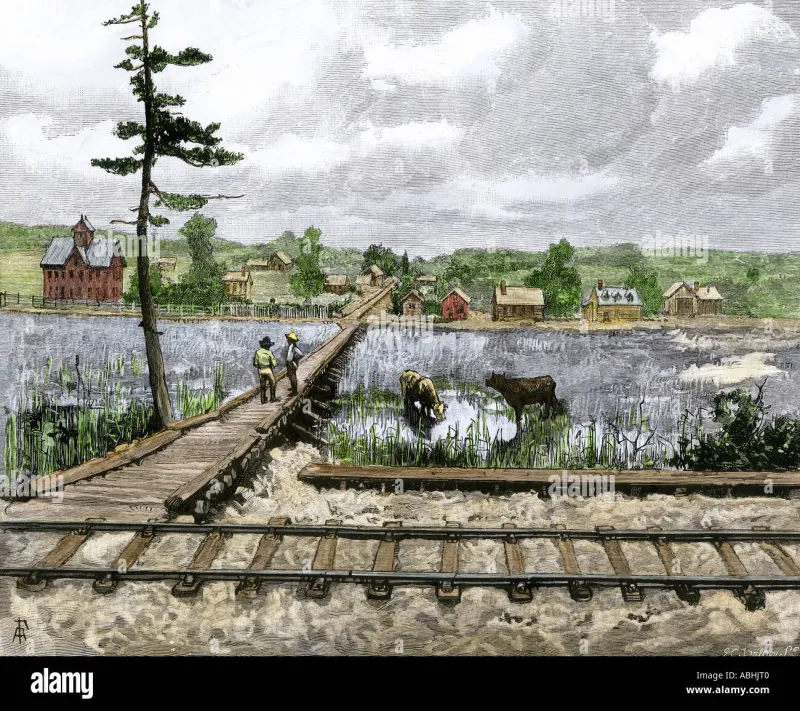
Photo: historic Midwest town flood 1800s river plains settlement, via c8.alamy.com
Drowned and Reborn: The Catastrophic Flood That Accidentally Built One of the Midwest's Most Enduring Towns
In the summer of 1881, the Kansas River did what Midwestern rivers do with a particular kind of indifferent violence: it rose, kept rising, and then simply erased the town of Unionville, Kansas from the landscape it had occupied for nearly three decades.
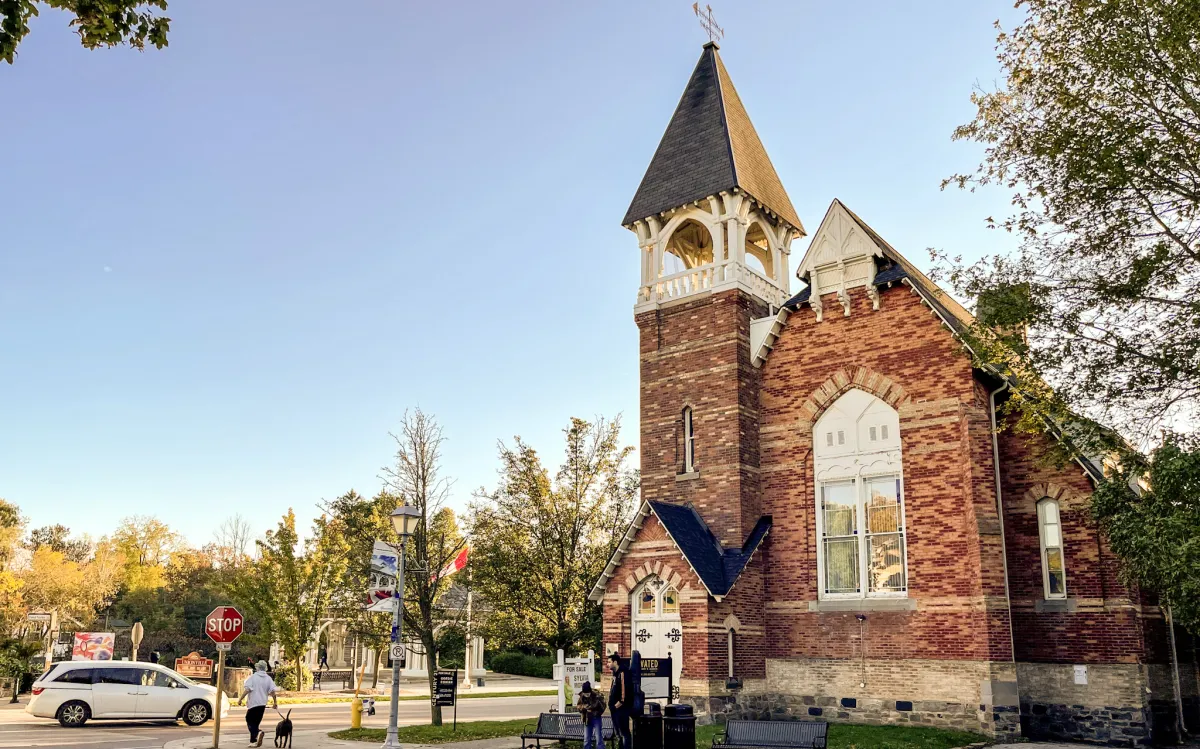 Photo: Unionville, Kansas, via roadtripontario.ca
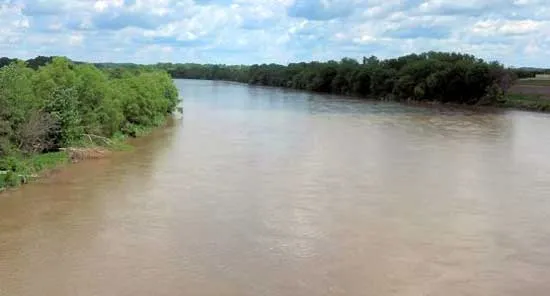 Photo: Kansas River, via legendsofkansas.com
Not metaphorically. The floodwaters that pushed through the Republican River valley that year were among the most destructive on record for the region — a slow, grinding inundation that gave residents just enough warning to move their families and animals to higher ground before swallowing homes, businesses, churches, and the accumulated infrastructure of a community that had considered itself well-established. When the water finally receded, what remained of Unionville's original townsite was a mudscape of ruined timber frames and silted-over foundations.
By any reasonable measure, the flood should have been the end of the story. Communities in 19th-century America didn't easily survive that kind of total destruction. The forces pulling survivors toward dispersal — toward simply moving on to wherever opportunity existed elsewhere — were powerful and practical. Starting over from scratch, on unfamiliar ground, with depleted resources, was an enormous gamble.
The people of Unionville took that gamble. And in doing so, they accidentally made one of the shrewder civic decisions in the history of the Kansas frontier.
Why the Original Site Was Always Going to Fail
Hindsight is a generous editor of history, but looking back at Unionville's original location, the flood starts to look less like a catastrophe and more like an intervention.
The town had been established in the early 1850s on low bottomland along the river — the kind of site that was irresistible to early settlers because the soil was rich, water access was immediate, and the flat terrain made construction easy. These were not foolish reasons. In the mid-19th century, proximity to water was often the difference between a viable settlement and a failed one.
What the original founders couldn't fully account for was the Republican River's behavior across longer time cycles. The river flooded with some regularity, and each flood deposited new silt that raised the surrounding terrain incrementally — which sounds beneficial until you realize it also raised the river's own flood stage, making each subsequent event slightly more dangerous than the last. The town had experienced smaller floods in 1864 and 1873, both manageable enough to rebuild from. The 1881 event was simply the version that finally exceeded the community's capacity to absorb the damage.
In other words, even if the 1881 flood had somehow been survivable in place, the underlying geography virtually guaranteed a worse flood would eventually follow. The original Unionville was, in a structural sense, a town waiting to be destroyed. The question was never whether it would happen, but when.
Building on Higher Ground
The decision to relocate rather than abandon was not unanimous, and it wasn't quick. Contemporary accounts from local newspapers — themselves hastily relocated to temporary premises in the weeks after the flood — describe extended and sometimes heated community meetings about what to do next. A significant portion of the surviving population initially favored dispersal, arguing that the region had demonstrated its hostility and that starting over elsewhere made more sense than rebuilding on the same vulnerable landscape.
What turned the debate was a combination of stubbornness, sunk cost, and genuine strategic thinking. A committee of the town's more established merchants and civic leaders conducted a survey of the surrounding terrain and identified a site on a natural ridge roughly a mile and a half northeast of the original townsite — high enough above the river's historic flood stages to be reasonably safe, close enough to the original location to retain access to existing roads and rail connections, and blessed with a gentle southern exposure that the original site had lacked.
The new Unionville was platted and construction began in the fall of 1881, with remarkable speed given the circumstances. Residents who had salvaged lumber and fixtures from their flooded homes used the materials to frame new structures. A few businesses that had managed to preserve their inventory reopened in temporary buildings within weeks. The community's newspaper, which had never actually stopped publishing despite the chaos, ran an editorial declaring the relocation "not a retreat but an advancement" — a spin that would have been laughable if the underlying geography hadn't actually supported it.
The Slow Disappearance of the Lucky Ones
The genuinely strange part of this story isn't what happened to Unionville after the flood. It's what happened to everyone else.
In the decades following 1881, the surrounding region's smaller settlements — communities that had been spared the flood's direct impact and had continued developing on their original lowland sites — began a slow and largely unremarked decline. Some were hit by subsequent floods in 1903 and 1935, events that proved far more destructive than the 1881 disaster because the affected towns had never been forced to confront their geographic vulnerability. Others simply faded as agricultural patterns shifted and the economic advantages of bottomland proximity became less decisive than they had been in the frontier era.
Unionville, meanwhile, had already done the hard work of repositioning itself. Its new site on higher ground proved not only flood-resistant but better suited to the expansion of road infrastructure in the early 20th century. The town's commercial district, rebuilt from scratch on a more rational grid, accommodated growth more efficiently than the organic layouts of its neighbors. By the 1920s, Unionville had become one of the more stable communities in its county — not large or particularly famous, but persistently there in a landscape where persistence was increasingly rare.
The Counterintuitive Arithmetic of Disaster
There is a version of this story that sounds like a simple lesson about resilience — the triumph of community spirit over adversity, which is a fine story but not a particularly strange one. What makes Unionville's history genuinely strange is the specificity of the mechanism.
The flood didn't just test the community's resolve. It forced a relocation that the community would almost certainly never have undertaken voluntarily, to a site that was objectively better than the one it replaced, at a moment when the town was still young enough and cohesive enough to survive the transition. Five years earlier or later, the same disaster might have produced dispersal instead of relocation. On a different piece of terrain, the higher ground option might not have existed. With a different population or leadership, the decision might have gone the other way.
The disaster had to happen at almost exactly the right time, in almost exactly the right way, to produce the outcome it did.
Which is, of course, the strangest kind of luck there is — the kind that only looks like luck after everything has already worked out.