Wrong Place, Wrong Day, Wrong City: The Man Atomic History Refused to Kill
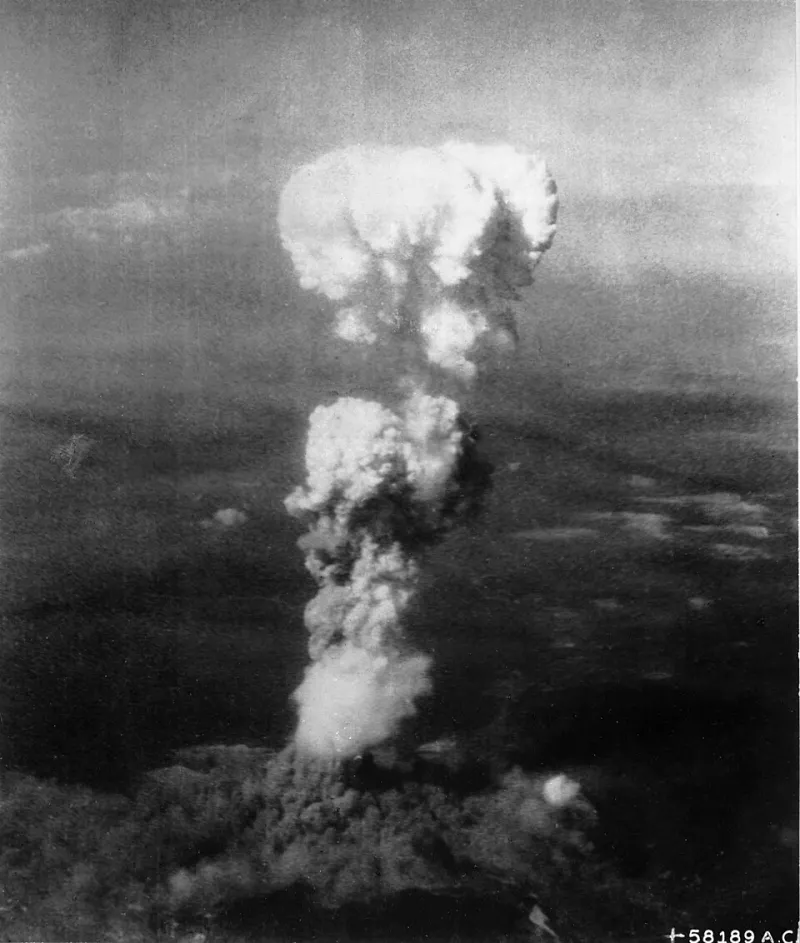
Photo: George R. Caron, Public domain, via Wikimedia Commons
There is a version of this story where Tsutomu Yamaguchi makes a different train reservation, or leaves Hiroshima a day earlier, or simply stays home in Nagasaki to begin with. In that version, he lives a quiet life as a naval engineer, retires, and history never learns his name.
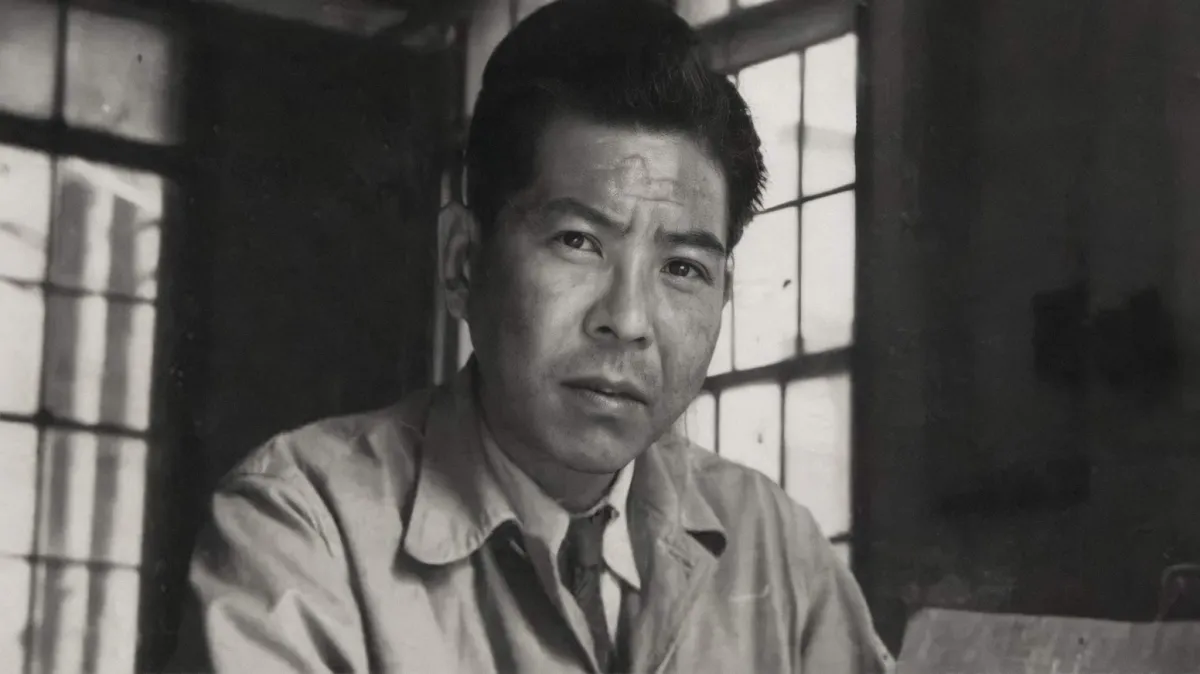 Photo: Tsutomu Yamaguchi, via mru.ink
That is not what happened.
A Business Trip Nobody Would Believe
In the summer of 1945, Yamaguchi was a 29-year-old engineer working for Mitsubishi Heavy Industries. He had been sent to Hiroshima on a three-month work assignment, and by early August he was ready to go home. His home was Nagasaki.
On the morning of August 6th, he was making his way to Hiroshima's train station when the world changed. At 8:15 a.m., the United States dropped Little Boy — a uranium bomb — on the city. The detonation occurred less than two miles from where Yamaguchi was standing.
The blast ruptured his eardrums. It burned his arms and the upper half of his body severely. It temporarily blinded him. He was thrown through the air and landed in a city that had, within seconds, become something that had no historical precedent.
He survived by taking shelter in a drainage ditch.
That night, he found two colleagues from Mitsubishi who had also survived, and the three of them spent the night in an air raid shelter. The following day, Yamaguchi — bandaged, burned, and half-deaf — made his way through the ruins of Hiroshima to the train station. He boarded a train.
He was going home to Nagasaki.
The Second Morning
Yamaguchi arrived in Nagasaki on August 8th. He went to a hospital to have his wounds treated. He rested. On the morning of August 9th, he reported to his office at the Mitsubishi facility in Nagasaki to brief his supervisor on what had happened in Hiroshima.
He was in the middle of describing the bomb — the single bomb that had obliterated an entire city — when his supervisor interrupted to say that one bomb could not possibly do what Yamaguchi was describing. It wasn't a reasonable claim. No weapon worked that way.
At 11:02 a.m., Fat Man detonated over Nagasaki.
Yamaguchi was again less than two miles from the hypocenter. The windows of the office blew in. The blast wave knocked him down. He was, for the second time in four days, at the center of an atomic explosion.
He survived again.
The Odds Nobody Can Calculate
Statisticians and historians have struggled to put a number on what happened to Tsutomu Yamaguchi, and the honest answer is that the math resists easy expression. Approximately 140,000 people died in Hiroshima. Approximately 70,000 died in Nagasaki. Among the hundreds of thousands who were present in one city or the other, a smaller subset — historians estimate perhaps 165 people — were present in both cities during the bombings. Japan has a specific term for this group: nijū hibakusha, meaning "double bomb-affected people."
Of that already-improbable group, Yamaguchi is the only person the Japanese government ever formally recognized as a survivor of both blasts.
The recognition didn't come easily or quickly. For decades, Yamaguchi was officially acknowledged only as a Nagasaki survivor. The Hiroshima exposure wasn't formally recognized until 2009, when he was 93 years old. The bureaucratic delay had a certain grim irony — a man who had survived the two most destructive single-weapon attacks in human history had to spend his final years filing paperwork to prove it.
What He Did With the Rest of His Life
Yamaguchi lived until January 2010, dying at 93 from stomach cancer. Whether that cancer was related to his radiation exposure is a medical question that was never definitively answered, though the connection is considered likely by most researchers.
For much of his post-war life, Yamaguchi was reluctant to speak publicly about what he had experienced. He raised a family. He worked. He did the things people do when they are trying to build a life on the other side of catastrophe. His wife and children also experienced the Nagasaki blast, though at greater distance.
In his later years, he became more willing to speak — particularly as the generation of hibakusha aged and began to disappear. He gave interviews. He wrote about his experiences. He testified before the United Nations in 2006, arguing for nuclear disarmament with the particular authority of someone who had stood inside two mushroom clouds and walked away.
"The atomic bomb is something that I cannot talk about with words," he said in one interview. Then he kept talking anyway, because somebody had to.
The Story That Sounds Like Fiction
The reason Yamaguchi's story circulates so persistently — the reason it keeps appearing in lists of unbelievable-but-true events — is that it violates every narrative instinct we have about how probability works. Surviving one atomic bomb already pushes the edges of what feels real. Surviving two, in different cities, three days apart, because you were traveling home from the first one, sounds like the premise of a story that a writer would abandon for being too convenient.
But history doesn't consult fiction writers before it happens.
Tsutomu Yamaguchi was simply a man who was in the wrong place twice, in the worst possible way, and who had the extraordinary misfortune — and the extraordinary fortune — to walk away from both.