Three Dead, One Leg Gone, and a Standing Ovation: The Surgery That Killed Everyone in the Room
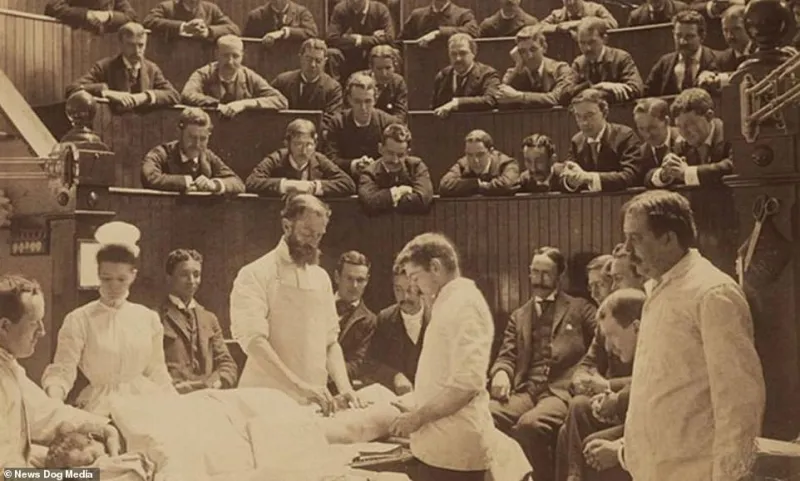
Photo: Victorian era operating theater surgery historical illustration, via i.dailymail.co.uk
Imagine watching a surgeon so skilled, so blindingly quick, that spectators showed up just to see him perform. Now imagine that same surgeon completing a textbook-perfect operation while accidentally killing three people in the process — including someone who was only there to watch.
This is not a horror story. It's a Tuesday in 1847 London.
Speed Was Everything Before Anesthesia
To understand how this happened, you have to understand what surgery looked like before the modern era. Anesthesia as we know it was barely a year old in 1847, and its adoption was still uneven across the medical world. For most of surgical history, patients were awake — screaming, thrashing, begging — while doctors cut into them. The only mercy a surgeon could offer was speed.
Robert Liston offered it in abundance.
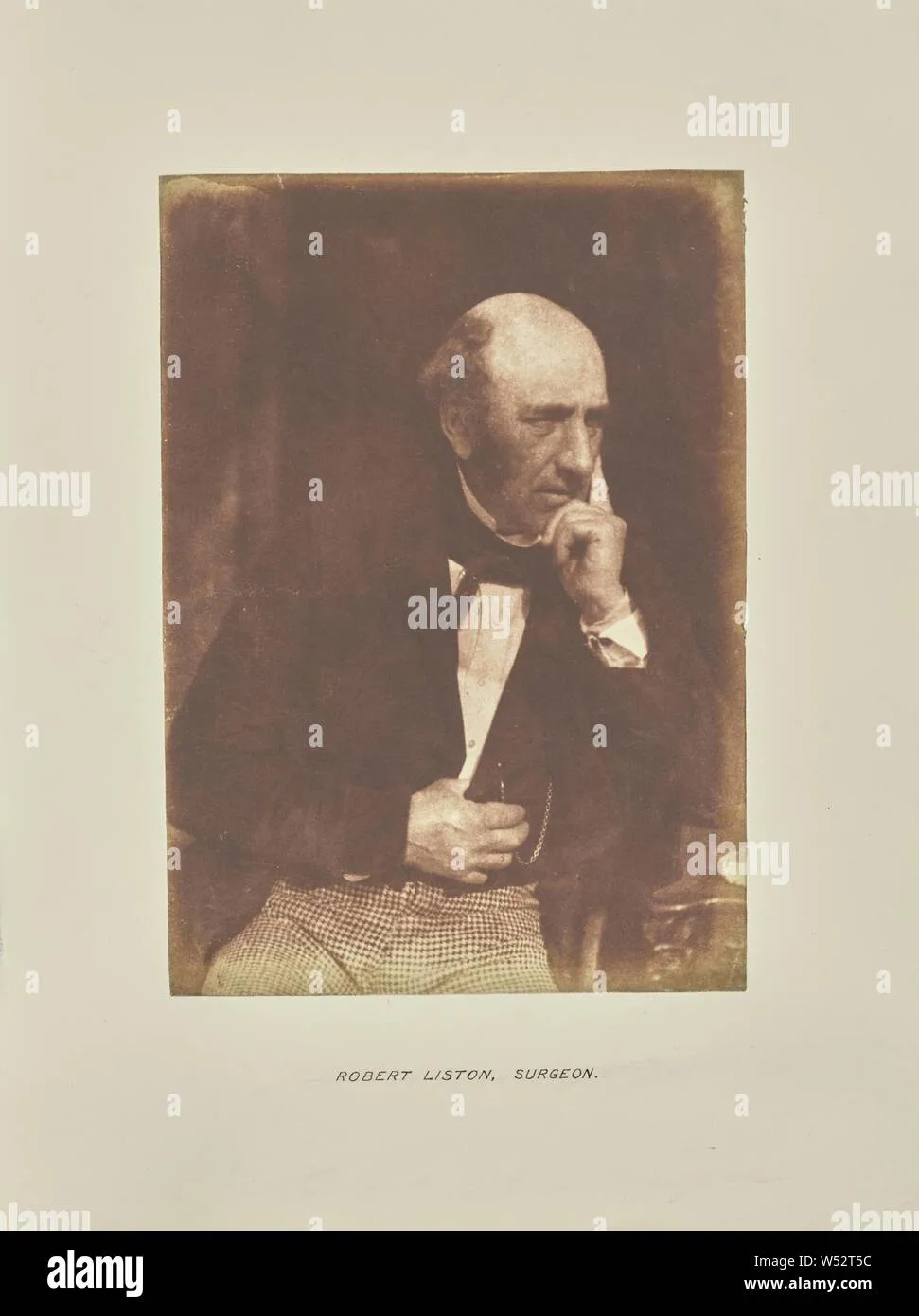 Photo: Robert Liston, via c8.alamy.com
The Edinburgh-born surgeon had built a reputation across Britain as the fastest knife in the operating theater. He could amputate a leg at the thigh in under two and a half minutes. Colleagues timed him. Crowds gathered. Medical students traveled from across Europe to watch him work, pressing into the tiered gallery of University College Hospital in London like fans at a sporting event. Before each procedure, Liston was known to look up at the audience and announce, with genuine showmanship: "Time me, gentlemen."
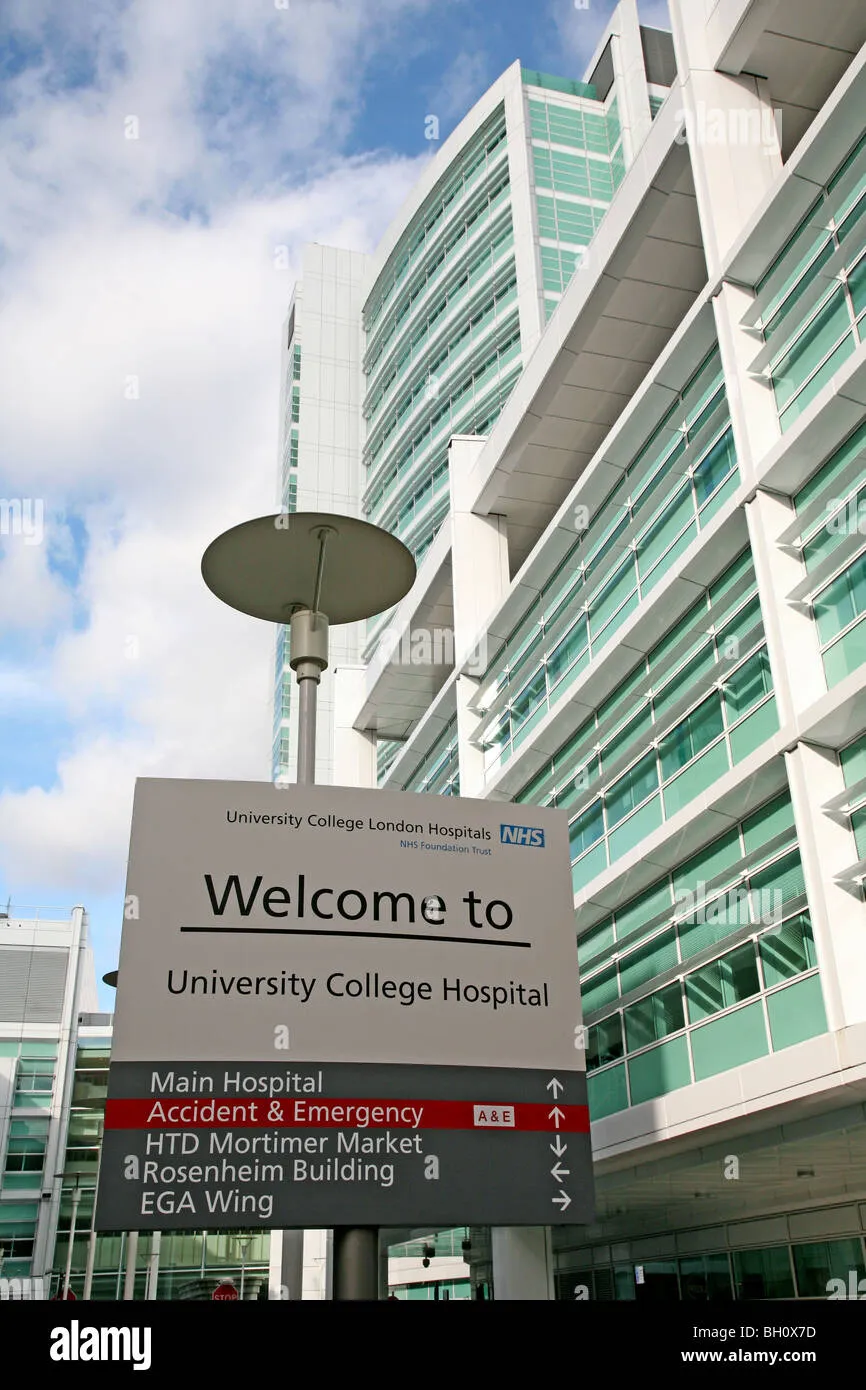 Photo: University College Hospital, via c8.alamy.com
For a patient strapped to a wooden table with nothing between them and the saw but willpower and a leather strap to bite down on, having Liston as your surgeon was about as good as it got.
Until, of course, it wasn't.
The Operation That Went Perfectly Wrong
The exact details of the infamous 1847 case have been preserved in medical literature, repeated in surgical history texts, and recounted with a kind of grim awe that has never quite faded. The patient came in for a leg amputation — a routine enough procedure by Liston's standards. He had performed hundreds.
What happened next unfolded with the cruel efficiency of a chain reaction.
Liston began the amputation at his characteristic pace, blade moving with the speed and precision that had made him famous. In the chaos of that rapid motion, he accidentally sliced through two fingers belonging to his young surgical assistant, who was helping hold the patient steady. The assistant's wounds, like the patient's amputation site, became infected in the days that followed — and in the pre-antiseptic world of Victorian medicine, infected wounds were frequently death sentences. Both the patient and the assistant died of postoperative gangrene.
That's two.
The third death is the one that makes this story feel like something a novelist would reject for being too on-the-nose. Among the spectators crowded into the gallery that day was a man who had come simply to observe — a not-uncommon practice in an era when surgery was as much public spectacle as medical procedure. As Liston's blade flashed through the procedure, the spectator watched the knife arc past the assistant's hand and apparently became convinced, in the blur of motion and blood, that he himself had been cut.
He dropped dead of shock.
He had not been touched.
A 300% Mortality Rate
The arithmetic is straightforward and deeply strange: one operation, zero survivors among those most directly involved. Medical historians have since labeled it the only surgery in recorded history with a 300% mortality rate — a description so absurd it sounds like a dark joke, which is precisely why it has endured.
Liston himself was not a careless man. That's the part of this story that resists easy narrative. He was by most accounts a gifted, dedicated surgeon who genuinely believed that speed reduced suffering. His instincts were not wrong in principle — longer surgeries under primitive conditions did increase the risk of shock and blood loss. The problem was that speed, taken to its logical extreme in a crowded, unsterile room with no margin for error, could also be catastrophic.
He was also operating at the precise historical hinge point when surgery was beginning to change. Anesthesia meant patients could be still. Germ theory, just a few years away, would eventually mean that surviving the knife was no longer the only obstacle. The entire framework that had made Liston's speed so celebrated was quietly becoming obsolete even as he performed his most notorious operation.
The Legacy of the Fastest Blade
Robert Liston died in 1847 — the same year as the infamous surgery — from an aortic aneurysm unrelated to his work. He left behind a genuinely complicated legacy. Before this particular disaster, he had saved countless lives through exactly the speed that killed three people that day. His surgical instruments were considered among the finest of his era. He was, by the standards of his time, excellent at his job.
But history has a way of collapsing nuance into the stories that stick, and the story that stuck with Liston is the one where everything went wrong simultaneously.
What makes this episode so enduringly strange isn't the tragedy of it — medicine has plenty of tragedy. It's the sheer mechanical improbability of the sequence. For a single procedure to claim a patient, an assistant, and a bystander through three entirely separate mechanisms — infection, infection again, and fright — required a specific convergence of speed, overcrowding, primitive conditions, and terrible luck that has never been replicated.
Surgeons today work in sterile environments, with anesthetized patients, gloved hands, and galleries that are conspicuously empty of nervous spectators.
Somebody learned something.