You Owe Us for the Rain: The Stormwater Fee That Nearly Broke Property Law
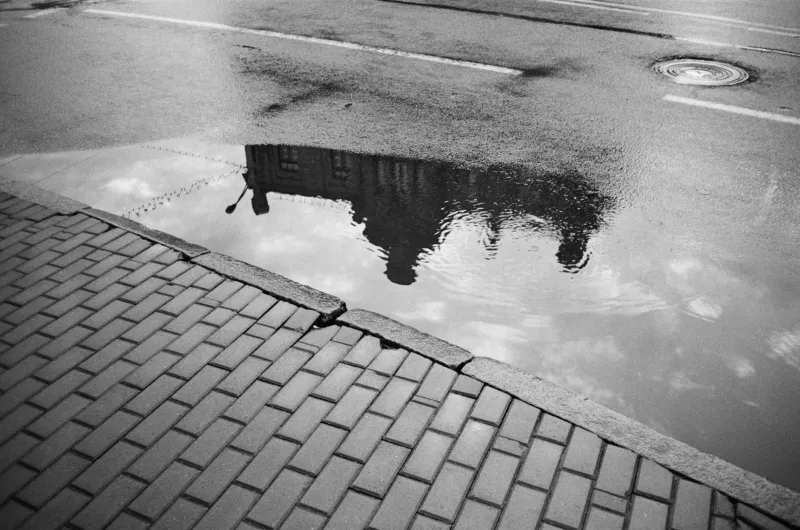
Somewhere in a municipal engineering office, someone had a perfectly reasonable idea. The city's stormwater infrastructure was aging. Federal environmental regulations required upgrades. The budget was tight. The solution seemed obvious: charge property owners a fee based on how much impervious surface — driveways, rooftops, parking lots — their land contained, because impervious surfaces produce runoff, and runoff was the problem.
It was the kind of policy that sounds like it belongs in a footnote of a public works report. Instead, it ended up in a courtroom, then another courtroom, and eventually sparked a constitutional argument that legal scholars are still arguing about today.
The Bill Nobody Expected
When the notices arrived, property owners stared at them with the particular confusion of people who have received a bill for something they didn't know could be billed. The fee wasn't enormous — for most homeowners, it landed somewhere between the cost of a streaming subscription and a tank of gas. But the principle of it hit differently.
You were being charged, in effect, for what rain did after it landed on your property. Not for the rain itself — nobody was quite that ambitious — but for the natural consequence of owning land that water ran off of. Businesses with large parking lots received the steepest bills, which led to the first wave of complaints. But the legal challenge that eventually threatened to unravel the whole thing came from a much smaller and more unexpected corner: a church.
The congregation argued, with surprising legal precision, that charging a religious institution for stormwater runoff amounted to taxing an act of God — and that the government had no constitutional authority to do it. The argument sounds almost comical on its surface. It was not comical in court.
When Rain Becomes a Legal Category
American property law is, by any reasonable measure, ancient and deeply strange. Much of it traces back to English common law principles that were written when the primary concerns were livestock, hedgerows, and the occasional dispute about whose mill got to use which section of a river. The concept of "natural flow" — the idea that water moves across land according to natural patterns and that landowners have certain rights related to that movement — is baked into property doctrine in ways that most people never encounter until something like a stormwater fee lands in their mailbox.
The church's attorneys argued that the fee effectively forced property owners to pay for a natural process they hadn't caused and couldn't control. Rain fell. Water ran. This was not a service the city was providing. It was a phenomenon the city was now claiming partial financial ownership over — and that, the argument went, raised serious questions about what a municipality could and couldn't claim jurisdiction over when it came to the natural world.
State courts did not laugh this out of the room. In fact, they found enough merit in the constitutional questions to allow the case to proceed through multiple levels of review, which is the legal system's way of saying: this is genuinely complicated.
The Loophole in the Sky
What emerged from the litigation was a surprisingly underexamined gap in American municipal law. Cities have clear authority over the land within their boundaries. They have clear authority over infrastructure built on or under that land. What they have considerably less clarity on is the legal status of natural processes — weather, water movement, atmospheric phenomena — that cross property lines without asking permission.
The stormwater fee assumed that the city had a kind of regulatory claim over what rain did once it hit private property. Opponents argued this was equivalent to taxing gravity. Supporters countered that the infrastructure built to manage the runoff was a genuine public service with a genuine cost, and that beneficiaries of a service could reasonably be asked to contribute to it.
Both arguments are, in their own way, completely correct. Which is exactly why the courts had such a hard time with it.
How It Resolved — Sort Of
The case didn't end with a landmark Supreme Court ruling or a sweeping legal precedent. It ended the way most genuinely complicated municipal disputes end: with a negotiated compromise that satisfied nobody completely and left the underlying questions technically unresolved.
The city restructured the fee, added exemptions for certain property types, and introduced a credit system that let property owners reduce their bill by installing rain gardens or permeable pavement. The church got a partial exemption. The parking lot owners grumbled and paid. Legal scholars wrote papers.
But the constitutional questions — Can a city charge you for what rain does? Who owns the hydrological cycle above your property? Where does municipal authority end and the atmosphere begin? — were never definitively answered. They were simply set aside, waiting for the next city to try something similar and the next attorney to pick the argument back up.
The Strangest Part
The strangest part of this entire episode isn't the legal theory. It's the fact that dozens of American cities currently operate stormwater fee programs, and most of them have never been seriously challenged. The policy is common. The legal foundation beneath it is, depending on who you ask, either solid or genuinely shaky.
Somewhere right now, rain is falling on a parking lot. A city is calculating the runoff. A bill is being generated.
And nobody is entirely sure, from a constitutional standpoint, whether that's legal.