Forecast Fury: The Small Claims Case That Nearly Made Weather Predictions Legally Binding
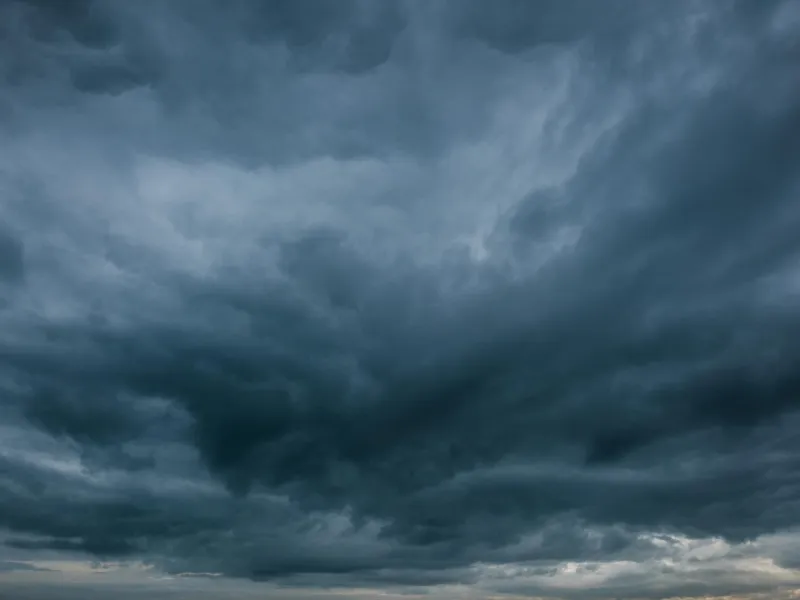
When Mother Nature Meets Judge Judy
Most people grumble about inaccurate weather forecasts and move on with their lives. But in 1993, Philadelphia resident Harold Steinberg decided he'd had enough of meteorological malpractice and did something that would send shockwaves through the National Weather Service: he sued them for getting it wrong.
What started as a $2,000 small claims case over a ruined picnic would escalate into a legal battle that threatened to fundamentally change how weather predictions work in America—and it all began with one spectacularly confident forecast that couldn't have been more wrong.
The Forecast That Started It All
On June 15, 1993, Philadelphia's National Weather Service office issued what seemed like a routine summer forecast. But this wasn't your typical "partly cloudy with a chance of showers" hedge-betting. Meteorologist Dave Richardson went on record with local news stations, declaring with unusual certainty that Tuesday would bring "clear skies, sunshine, and temperatures reaching 78 degrees with absolutely no chance of precipitation."
Richardson's confidence wasn't entirely unfounded. The weather models showed a massive high-pressure system parked over the Delaware Valley, and satellite imagery revealed not a cloud in sight. It looked like a textbook perfect beach day.
 Photo: Delaware Valley, via res.cloudinary.com
Harold Steinberg, a 54-year-old insurance adjuster, had been planning his annual company picnic for months. With Richardson's emphatic forecast echoing in his ears, Steinberg made a fateful decision: he'd leave the umbrellas and rain gear at home. After all, the man on TV had said "absolutely no chance."
When Confidence Meets Reality
What happened next could only be described as meteorological Murphy's Law. Around 2 PM, just as Steinberg's company picnic was hitting full swing at Fairmount Park, an unexpected thunderstorm rolled in from the west—a freak cell that had formed so quickly it never showed up on radar until it was already dumping torrential rain on surprised picnickers.
 Photo: Fairmount Park, via img.joomcdn.net
Within minutes, 200 employees were scrambling for cover. Steinberg, determined to salvage the event, spent the next three hours in the downpour trying to move tables, pack up food, and coordinate transportation for his soaked colleagues. By the time the storm passed, he was drenched to the bone and shivering uncontrollably.
Two days later, Steinberg was diagnosed with pneumonia. His doctor confirmed that prolonged exposure to cold rain had weakened his immune system and triggered the infection. The medical bills totaled $1,847, and Steinberg missed two weeks of work, costing him another $2,200 in lost wages.
The Legal Lightning Strike
Most people would have chalked it up to bad luck and moved on. But Steinberg was an insurance adjuster—he spent his days determining liability and assigning blame for unexpected events. In his mind, the Weather Service had made a specific, confident prediction that proved catastrophically wrong, and their negligence had directly caused his financial losses.
On July 30, 1993, Steinberg filed a $4,047 claim in Philadelphia Small Claims Court against the National Weather Service, arguing that Richardson's "absolutely no chance" forecast constituted a guarantee that created legal liability when it proved false.
The filing sent immediate ripples through NOAA headquarters in Silver Spring, Maryland. Never before had a private citizen attempted to hold the Weather Service financially responsible for an inaccurate forecast. Emergency meetings were called, legal precedents were researched, and panic began to set in.
The Sympathetic Judge
Small claims court operates on different principles than federal court. There are no juries, minimal legal procedures, and judges have broad discretion to make common-sense rulings. When Steinberg's case came before Judge Maria Santos on September 14, 1993, she listened to both sides with growing sympathy for the plaintiff.
Steinberg presented his case methodically: the specific forecast, the medical records, the lost wages, and the reasonable reliance on what he considered a professional guarantee. The Weather Service's hastily assigned attorney argued that forecasts are inherently uncertain and that the agency couldn't be held liable for the unpredictable nature of weather.
But Judge Santos wasn't buying it. "If you're going to go on television and say 'absolutely no chance,'" she declared, "then you better be absolutely right. This man relied on your expertise to his detriment."
In a stunning decision that would make headlines nationwide, Santos ruled in Steinberg's favor, ordering the National Weather Service to pay the full $4,047 in damages.
Panic at NOAA
The ruling triggered what one NOAA official later described as "controlled chaos" at the agency's legal department. If the decision stood, it could open the floodgates to thousands of similar claims from anyone who suffered damages after relying on an incorrect forecast. Farmers, event planners, construction companies—virtually anyone whose livelihood depended on weather could potentially sue for losses.
More frightening was the potential chilling effect on forecasting itself. If meteorologists could be held financially liable for wrong predictions, they might resort to the most vague, non-committal language possible, rendering forecasts useless for public safety and economic planning.
NOAA's legal team immediately filed an appeal, arguing that sovereign immunity protected federal agencies from such claims and that weather prediction was an inherently uncertain science that couldn't be held to guarantee standards.
The Appeal and Aftermath
The case attracted national media attention, with weathercasters across the country suddenly nervous about their own liability exposure. Some meteorologists began adding elaborate disclaimers to their forecasts, while others stopped using definitive language altogether.
The appeal was heard by Philadelphia County Court in December 1993, where a three-judge panel unanimously overturned Santos's ruling. The court found that federal sovereign immunity did indeed protect the Weather Service from such claims, and that public weather forecasting served a governmental function that couldn't be subject to private lawsuits.
Steinberg's legal journey ended there—he couldn't afford to appeal to state supreme court—but the case had already changed the landscape of weather forecasting forever.
The Lasting Storm
While Steinberg never collected his $4,047, his case prompted significant changes in how meteorologists communicate uncertainty to the public. The National Weather Service implemented new guidelines discouraging absolute language in forecasts, and weather services nationwide began emphasizing probability ranges rather than definitive predictions.
Today, you'll rarely hear a meteorologist say "absolutely no chance" of anything. Instead, they speak in percentages and ranges, acknowledging the inherent uncertainty in predicting the most chaotic system on Earth.
Harold Steinberg's soggy picnic became a cautionary tale that reminds us of a fundamental truth: when it comes to weather, the only guarantee is that there are no guarantees. But for a brief, shining moment in Philadelphia Small Claims Court, it looked like Mother Nature might finally be held accountable for her mood swings.