The Ghost on the Bestseller List: America's Most Celebrated Author Who Never Existed
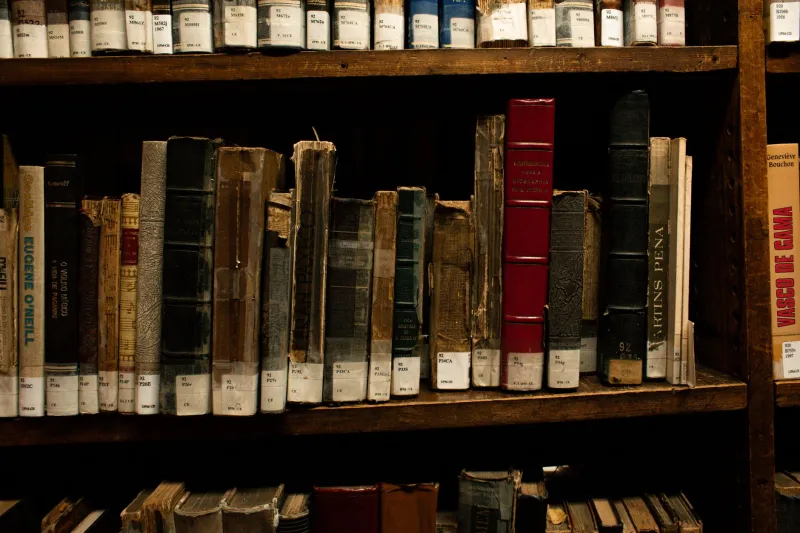
Picture this: a reclusive genius. A writer so intensely private that no publisher had ever met them in person, no journalist had ever landed an interview, and no photograph had ever surfaced. Readers loved the mystery. Critics praised the prose. The literary world assumed it was dealing with an eccentric but brilliant mind hiding somewhere in rural America, too pure for the spotlight.
They were half right about the hiding part.
A Name Without a Face
By the mid-1970s, the American publishing industry had developed a minor obsession with a writer whose name appeared on a growing shelf of acclaimed novels. The books were serious, layered, and emotionally precise — the kind of fiction that gets taught in college courses and quoted in wedding speeches. Reviewers described the author as "a singular American voice." A prominent literary magazine once called the debut novel "proof that great writing doesn't need a great ego behind it."
What nobody knew — what nobody even suspected — was that the author in question had been invented from scratch.
The name, the biography printed on dust jackets, the carefully worded author's note that appeared in each book — all of it was fabricated. There was no reclusive genius in rural America. There was, instead, a small group of people who had collectively decided to see how far a fictional identity could travel through the most credibility-obsessed industry in the country.
The Mechanics of the Deception
The hoax worked, in large part, because the publishing world of the 1970s ran almost entirely on trust and reputation. Agents vouched for writers. Editors trusted agents. Publicists built images around whatever materials they were handed. Nobody demanded to meet an author in person as a condition of publication — and why would they? Writers were, by professional reputation, a notoriously antisocial bunch.
The people behind the pseudonym exploited every one of these assumptions. Correspondence was handled through a post office box. Contractual documents were signed with the invented name. When editors pushed for a photo, they received a carefully staged image of someone unrelated to the actual writing. When interview requests piled up, a form letter citing "medical reasons" and "a deep commitment to letting the work speak for itself" was dispatched.
The actual writing — the thing that made all of this possible — was being produced by someone whose real identity was, by the standards of the literary world, completely unremarkable. Not a celebrated figure in hiding. Not a disgraced writer reinventing themselves. Just someone who had decided, for reasons that were part creative experiment and part genuine frustration with the publishing industry's obsession with author persona, to see whether the work could succeed entirely on its own terms.
In a way, it was a controlled experiment in whether the literary establishment actually read what it claimed to celebrate.
Why Nobody Looked Harder
This is the part of the story that should make every book club in America pause mid-sip.
The hoax wasn't maintained through extraordinary cleverness. It was maintained through the publishing industry's own unwillingness to look too closely at something that was already working. The books sold. The reviews were good. The author's mysterious absence became a selling point rather than a red flag. Reclusive writers were fashionable. Think of Thomas Pynchon, who had spent years dodging cameras while his novels landed on required reading lists nationwide. Privacy, in literary circles, read as integrity.
So nobody pushed. Nobody hired a private investigator. Nobody cross-referenced the author's supposed hometown with public records. The industry accepted the fiction because the fiction was profitable and prestigious, which, when you think about it, is exactly the kind of thing a satirist would invent.
The Unraveling
After nearly four decades, the deception collapsed not through investigative journalism or a dramatic confession, but through something far more mundane: a legal dispute over an estate.
When one of the people involved in maintaining the pseudonym died, paperwork surfaced that connected the invented name to real financial accounts, real contracts, and real people. A sharp-eyed attorney noticed the discrepancies. A quiet inquiry became a less quiet inquiry. And eventually, the literary world found itself staring at the answer to a question it had never thought to ask.
The revelation landed with the particular awkwardness that comes when an industry realizes it has been praising something it didn't fully understand. Critics who had written thousands of words analyzing the author's "distinctive worldview" had to reckon with the fact that the worldview belonged to someone they had never considered. Awards committees shuffled uncomfortably. A few publications ran corrections that read more like apologies.
What It Actually Proved
Here's the strangest part: the books didn't get worse when the truth came out. The prose didn't suddenly read differently. The emotional weight didn't evaporate. The work was exactly what it had always been — which was, of course, the entire point.
The hoax was, at its core, an argument. A long, patient, wildly successful argument that the literary world's obsession with author identity — with biography, with persona, with the story behind the story — had very little to do with whether writing was actually good.
The real author had spent four decades proving it. The publishing industry had spent four decades helping make the case.
Somewhere, in the margins of a book that millions of people genuinely loved, the joke was always there. Most people just never thought to look.